Japan 2026, Day 3: Sapporo and Noboribetsu

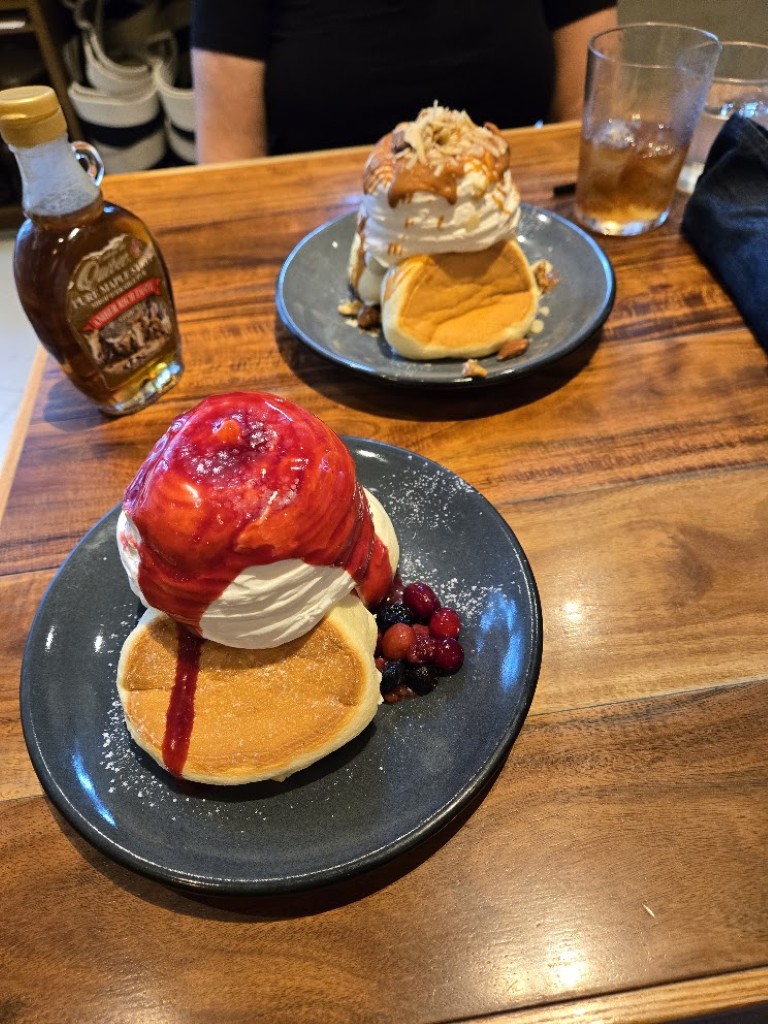
For our last day in Sapporo, we decided to stick close for breakfast and have pancakes in a restaurant below our hotel.  (“Below” in this case means that the front desk for our hotel was on the 5th floor, and the restaurant was at street level.)

While waiting for our food to arrive, we watched a number of confused patrons ask directions to the bathroom, all of whom were directed here:
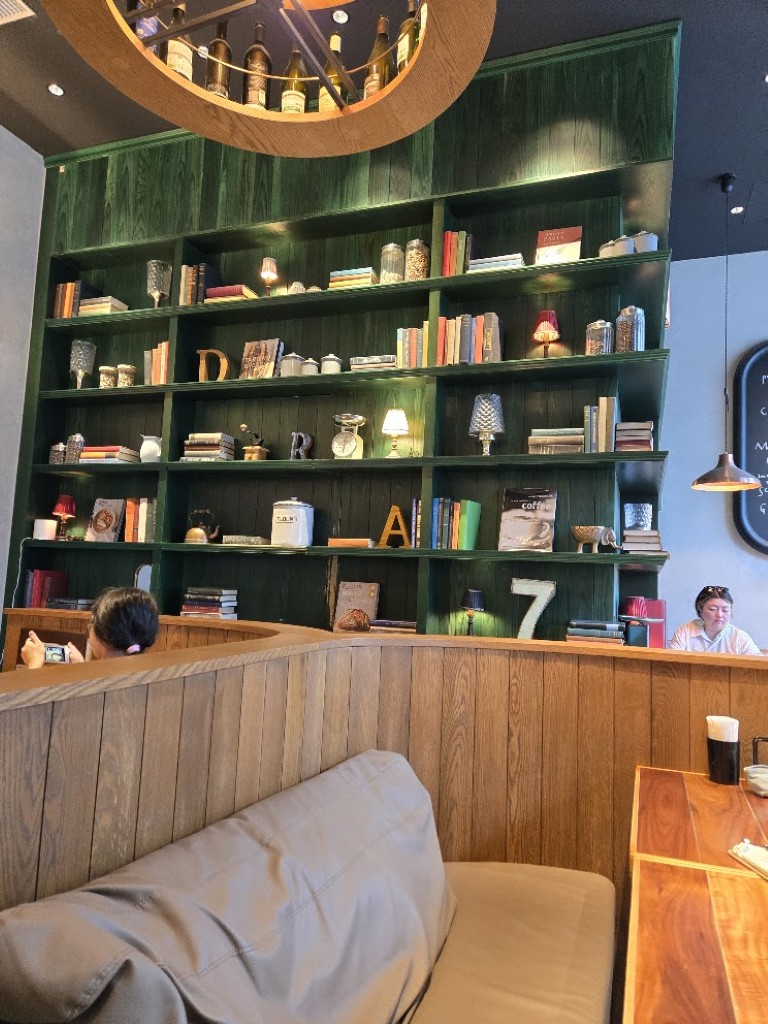

Can you spot the bathroom door in this picture?  If you zoom in, you’ll see the shelf is a bit worn below the flour bin – you push there to move the bookshelf aside to access the washroom.  Which is pretty cool.

What else is cool is that since we were last in Japan, the message seems to have been received that 外国人 such as ourselves would prefer to have pancakes available for breakfast, and not just as an afternoon snack.  As such, unlike our last visit, we were able to get supper fluffy soufflé pancakes for the first meal of the day. So we did.

Since this WAS our last day, we had to check out of our room and take our suitcases to a coin locker in the train station until it was time to catch our bus at 1:40. Fortunately, we travel pretty light – neither of us checked a bag at all during the trip except for the flight home, so our total encumbrance was two carry on-sized bags and two backpacks.

Baggage stowed, we went to see what else there was to see, and found a cool museum in the “Red Brick Building” a former government office.  It had a lot of neat exhibits about the various cities in Hokkaido, the history of the province, Japan’s ongoing argument with Russia about who owns the four islands between Hokkaido and the Kurils, (spoiler, Japan thinks they do and Russia thinks they do) and other historical stuff.

None of which we were allowed to photograph, so we didn’t.

In particular, there was a really interesting display about the indigenous Ainu culture on the island, which did a really quease-inducing job of tapdancing around the way they’ve been treated over time by the government.  Eerily reminiscent of similar whitewashing attempts in, oh, I don’t know – the US. And Canada.

Ergh.

It was raining, so we wandered back down into the underground mall to look for lunch.  We took a number at a conveyor belt sushi restaurant, and then realized that number was 82. Now serving? 36.

We spent an anxious hour watching the clock tick forward to the time we absolutely, positively, COULD NOT wait any longer to catch our bus while the “now serving” number clicked agonizingly slowly upwards.  We were finally seated at 1:05, with our bus departure at 1:40.  The only thing that saved us was the fact that while Leigh stayed in line, I had gone and grabbed our bags from the lockers.

And then we just shoved sushi into our faces WAY too fast to properly enjoy it.  Pity – it was damn good sushi.
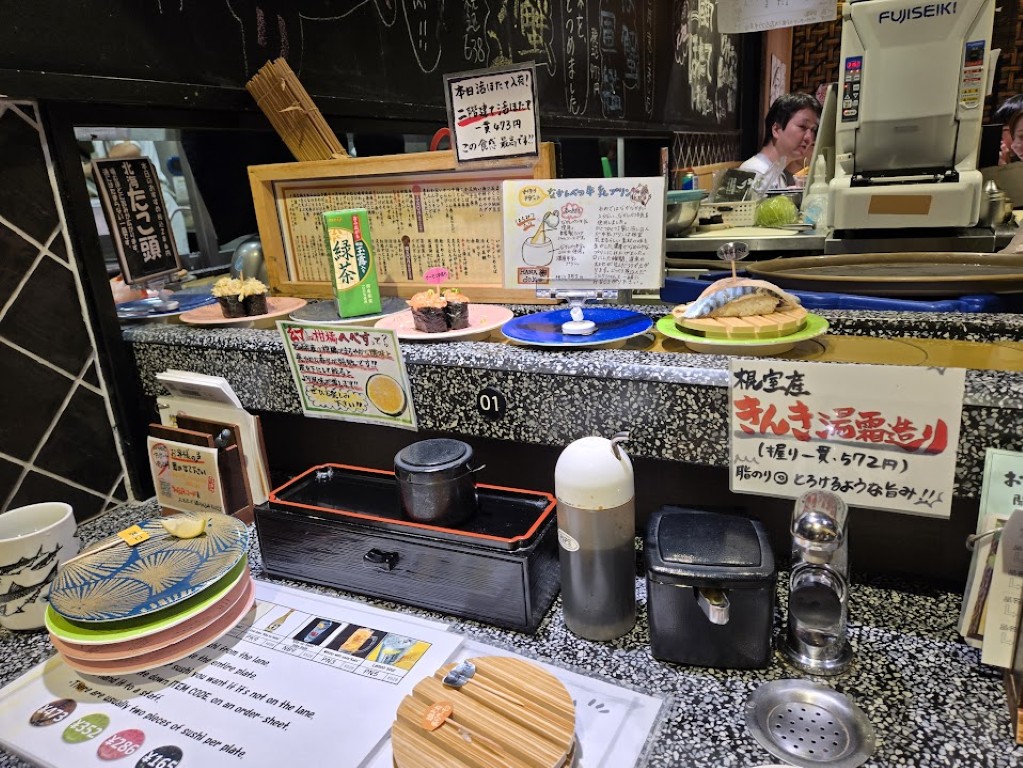

We made it to our bus stop just as the bus was pulling up, and were unceremoniously hurled on board to make our trip.

Where were we going?  Noboribetsu, a small onsen (hot spring) town, full of ryokan (traditional inns), kanketsusen (geysers), and combini. (convenience stores)
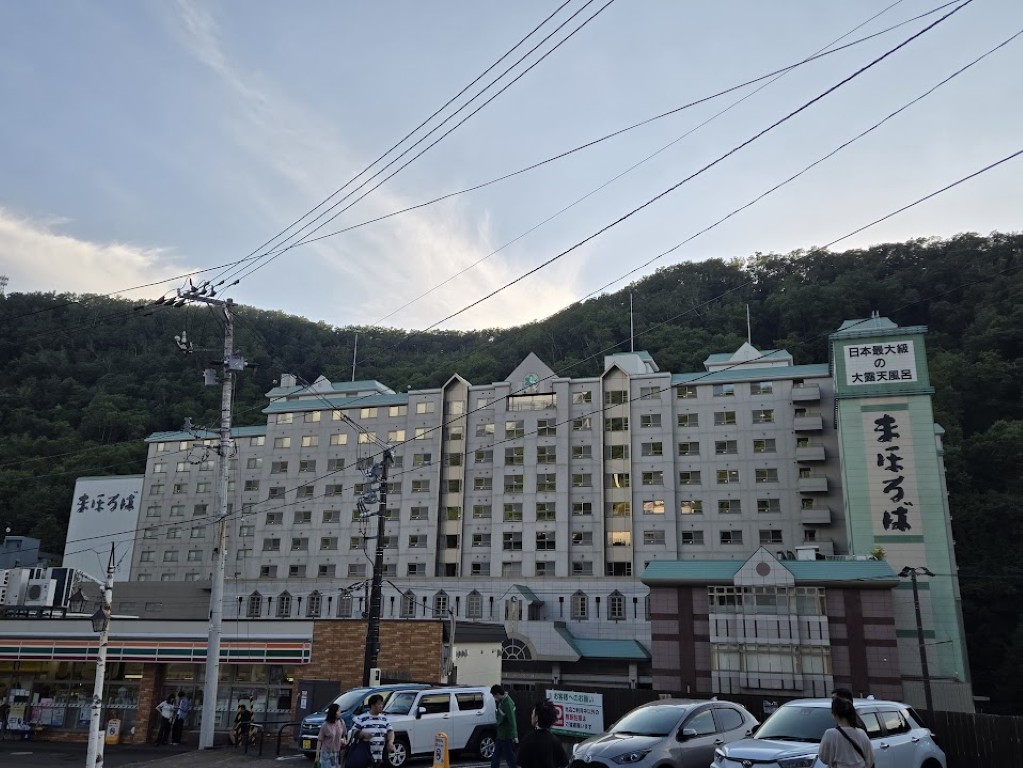

To be fair, everywhere in Japan is full of combini.

The road up the hill from the main highway to Noboribetsu features this imposing apparition:
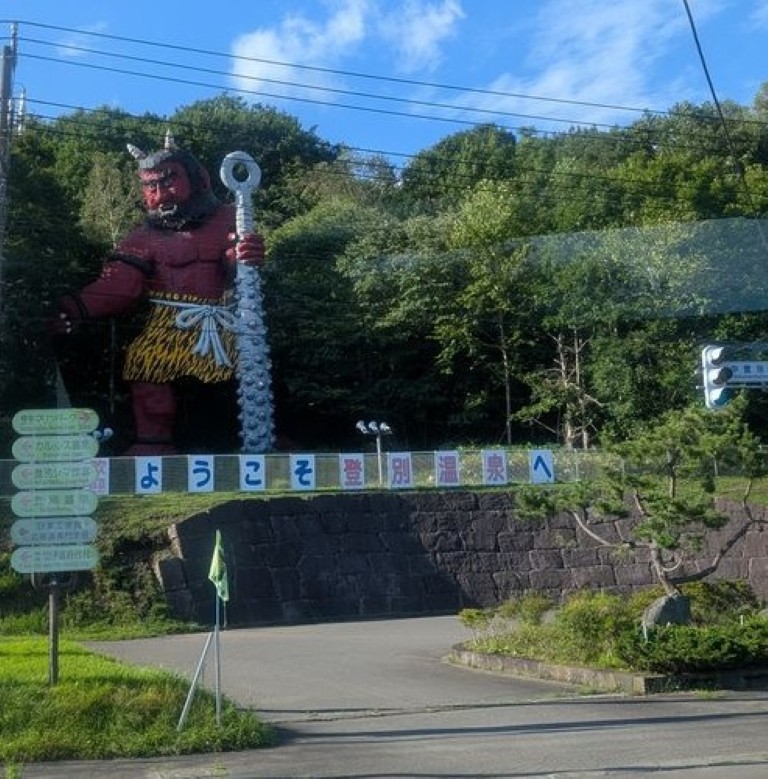
The text directly under him says “welcome,” but…

On arriving at our ryokan, we checked in, were issued our yukata, and then went for a walk to check out the town.  We opted NOT to do so in the yukata.

Which WAS an interesting decision to make.  After all – these onsen are inns for tourists.  Primarily Japanese tourists, but tourists nonetheless, and we WERE tourists. And we saw lots of hotel guests who WERE walking the streets in yukata.  So I think it’s a difficult line to locate in terms of being appropriative vs. respectful.

What WASN’T difficult to determine was that it was way too hot for long sleeves.  We wore the yukata to dinner, hopefully that’s good enough.

We found this square with painted clubs to represent the different demons that populate the valley.
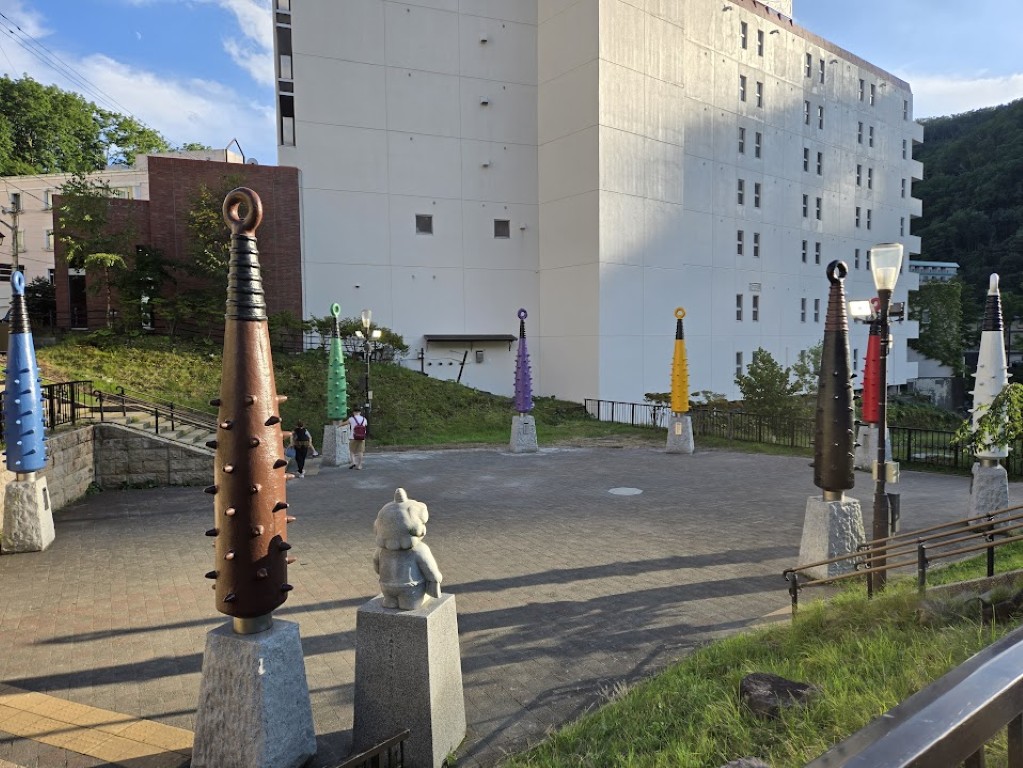
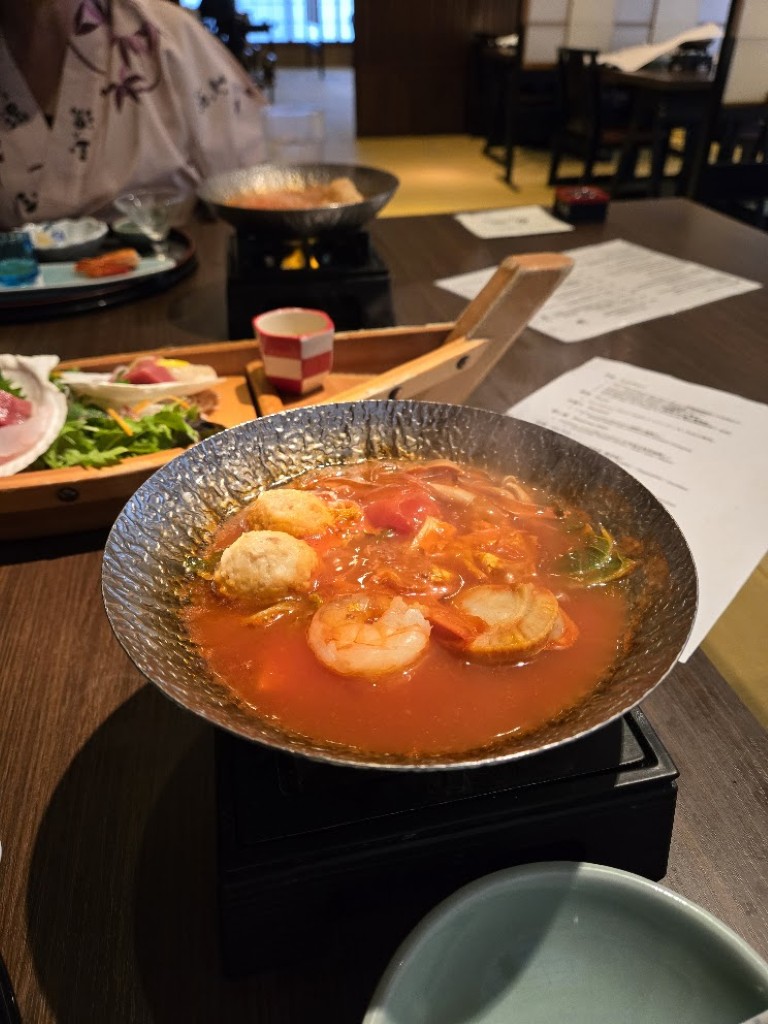
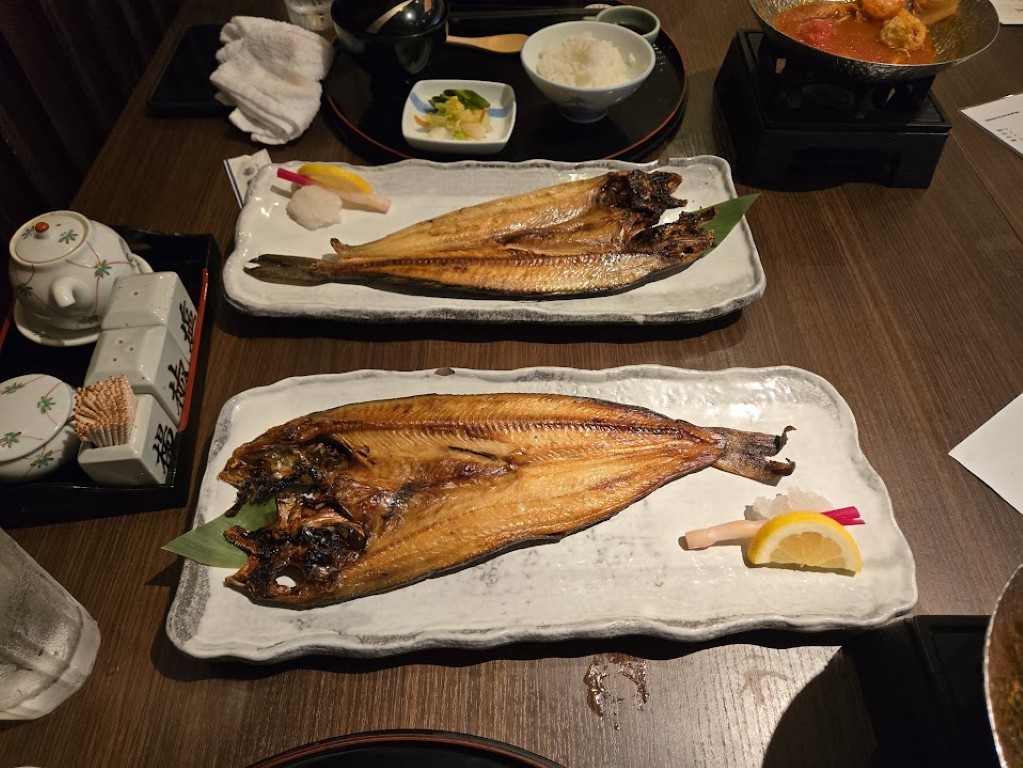
And soon it was time to return to our hotel for dinner. One of the things a traditional ryokan stay is know for is a multicourse kaiseki meal.  These meals always contain certain types of courses in a set order – appetizers, steamed dishes, grilled dishes, etc. Also, while you’re stuffing yourself, they have time to sneak into your room and lay out the futons.

The ryokan meal we had last time we were in Japan was a real highlight, and this one did NOT disappoint.
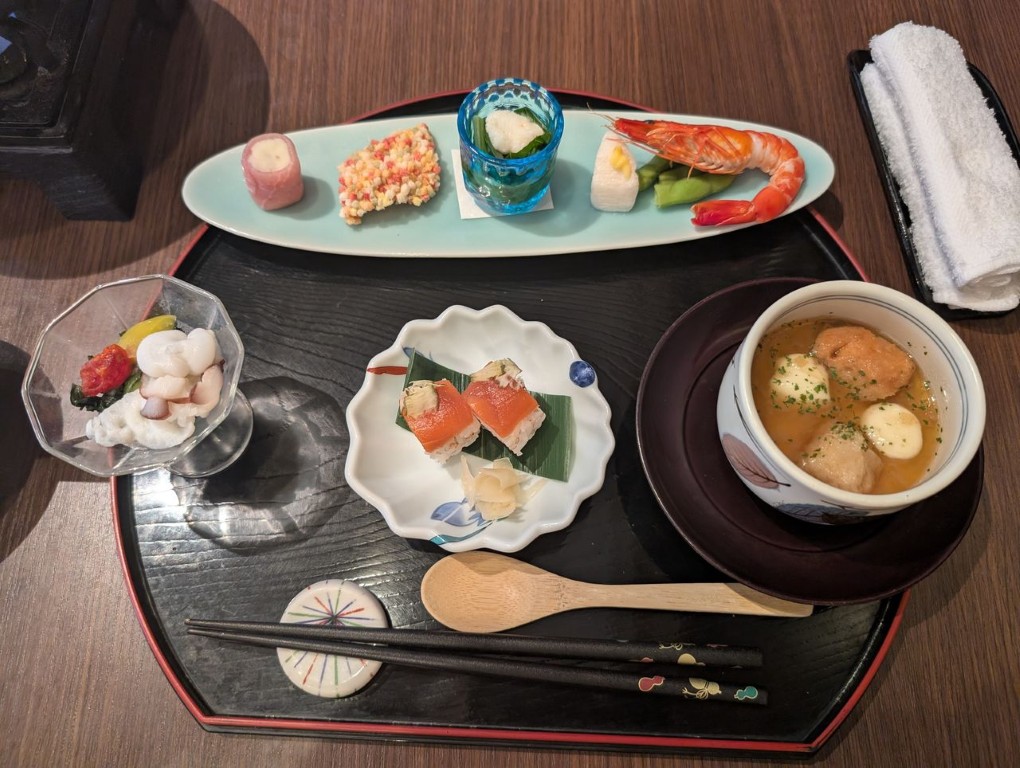
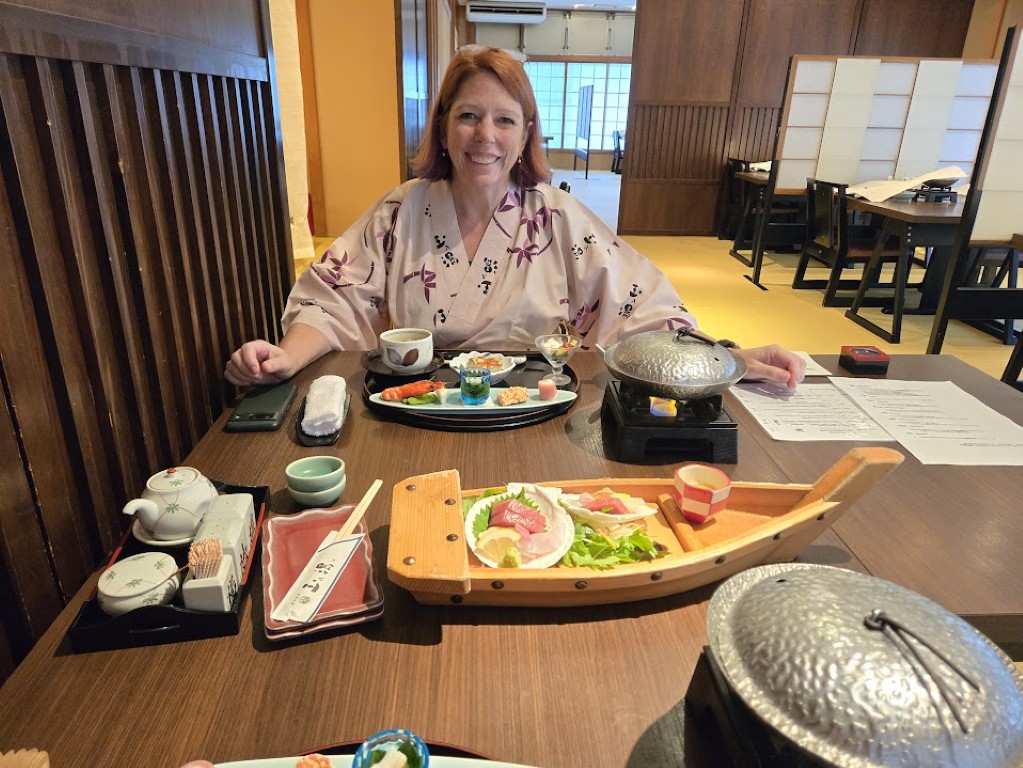
There was also dessert, but we had to forget to photograph SOMETHING, didn’t we?

After dinner, we went back out again to see what the town was like at night, and I’m glad we did, because the geyser in the square we visited earlier was now erupting.  Under the bridge someone had built over it, because that can’t possibly cause a problem, right?
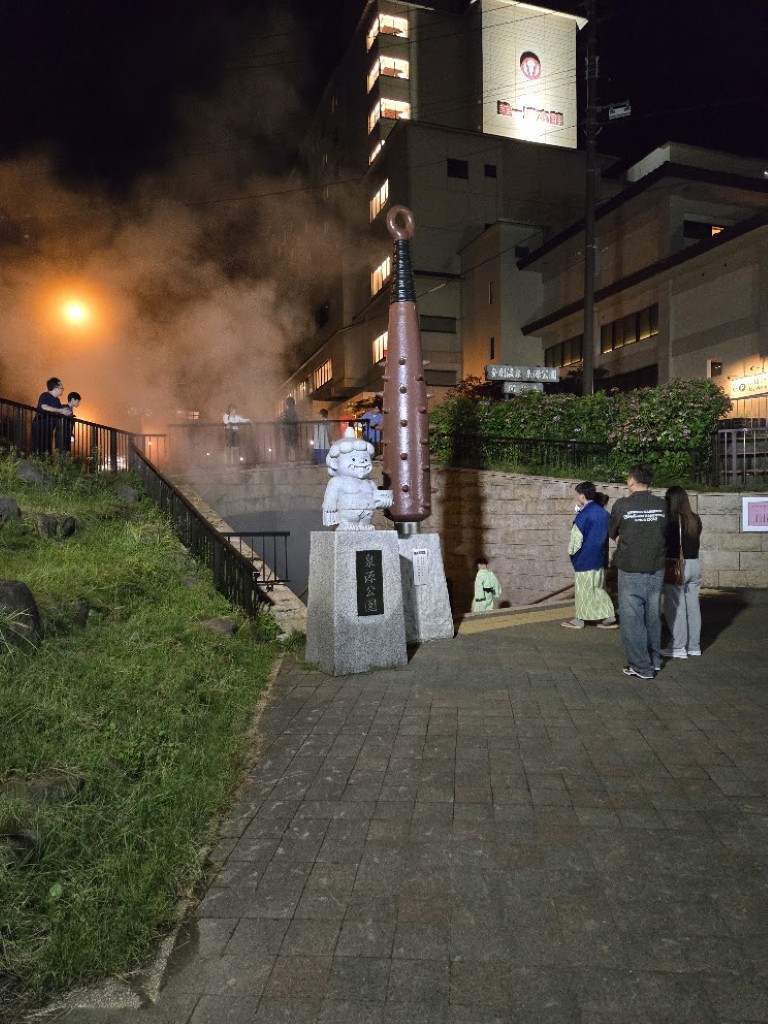

It was too dark to get a good picture of the geyser itself, but even that wouldn’t convey the most interesting thing which was the NOISE.  Apparently every three hours this thing makes a noise like putting a load of bowling balls in a cement mixer.  Wild.

Since we can’t easily post our OWN video, here’s a link to someone else’s.

And with that, it was time for futon.
Japan 2026, Day 2: Sapporo

Day 2 dawned somewhat grey, but we had a few sights we wanted to see in Sapporo.  It turns out that a number of the things I had marked on my “possible” list were a long way out of town, but there was definitely interesting stuff nearby.  We started out at Mermaid coffee for a delicious cheese toast and pourover.

Which we didn’t photograph.  But the coffee was so good even Leigh liked it – looks like I can only find coffee to her taste in Asia. (Despite the fact that the beans in this case were from El Salvador.)

After breakfast we hopped on the subway.  We still had our IC cards left over from our previous trip, and they worked flawlessly after we put some more money on them at a 7-11.  I can’t stress enough how painless these cards make most local transit in Japan. You can install an app tap them to your phone to check the balance. (If you have an iPhone, you can even just put them on your phone and tap that on the bus, but we’re Android folks.)

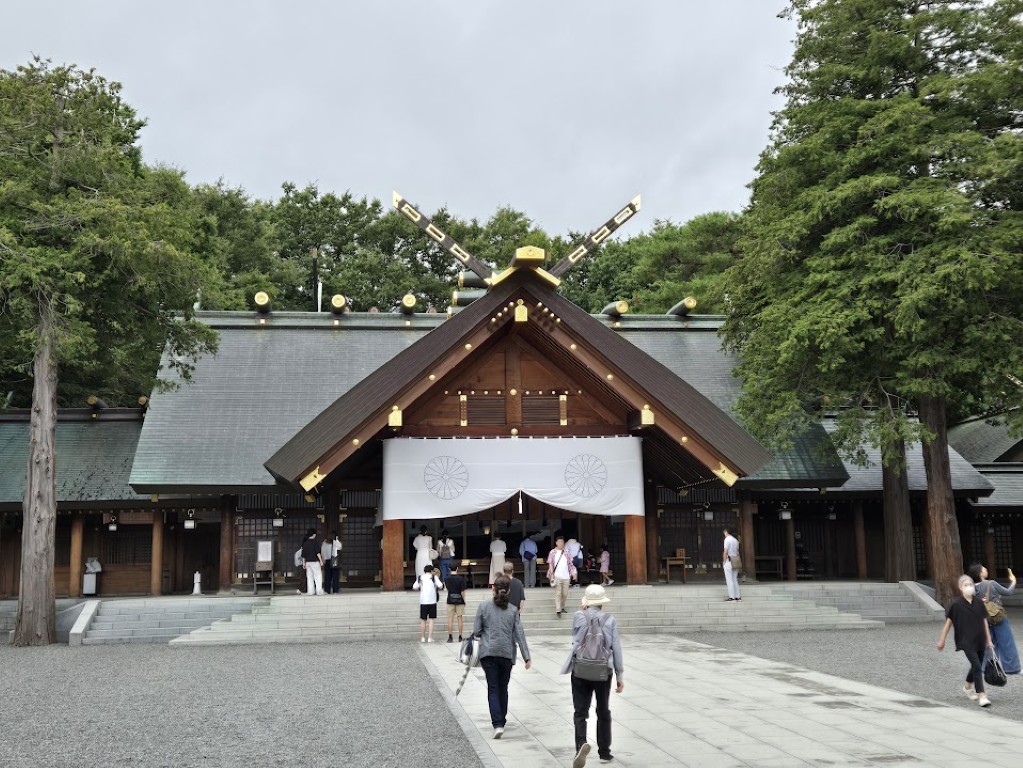
At any rate, we were off to Hokkaido shrine, which is very deliberately designed to evoke a Samurai helmet.

The building dates from 1871.  Or rather a building just like it dates from 1871 – that one burned down in 1974, but was rebuilt four years later.

We had lunch plans, but we still had a few hours to go, so we decided to walk back instead of just hopping on transit.  (That, and it was a bit of a hike back to the transit stop.)  We ended up at a modern art museum, which is normally our bag, but the one exhibit on offer didn’t sound that exciting.  So we just headed back downtown and wandered around until it was time to board the bus for lunch – at the beer museum!

You’ll never guess what brand of beer is made in Sapporo.  Never never.

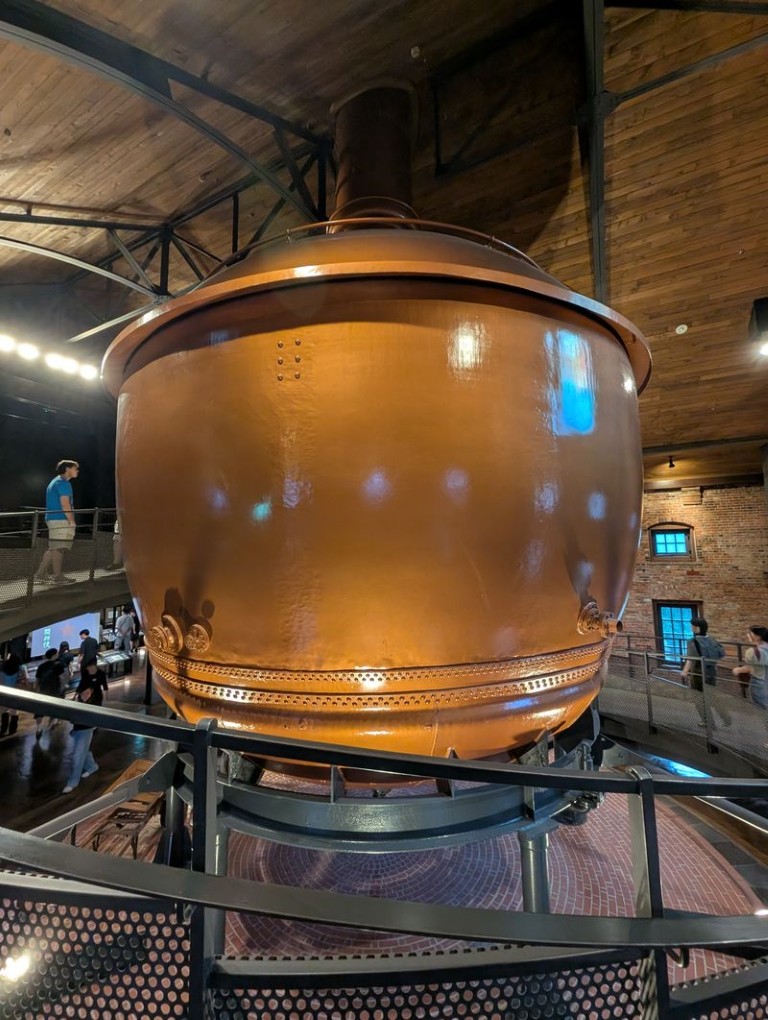
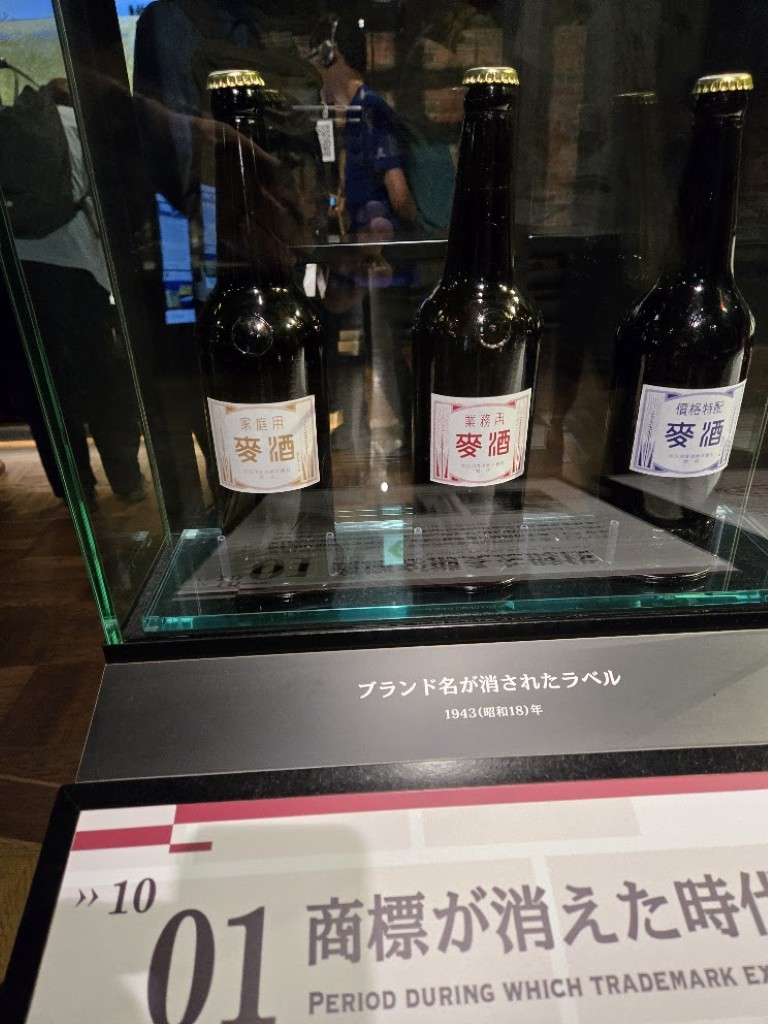
At any rate, the museum has a fascinating history of the brand, including why Japan started making beer in the first place, and why in Hokkaido specifically.  (Hint – easier to get ice.)  My favorite exhibit was the bottles from World War II, when all the branding was removed, and they just said “Beer.”

The audio tour had a bunch of extremely earnest actors acting out a bunch of extremely earnest scripts about imaginary vignettes in the history of Sapporo Beer.  I think Leigh and I will probably be quoting “I don’t like bitter things!” back and forth to each other forever.

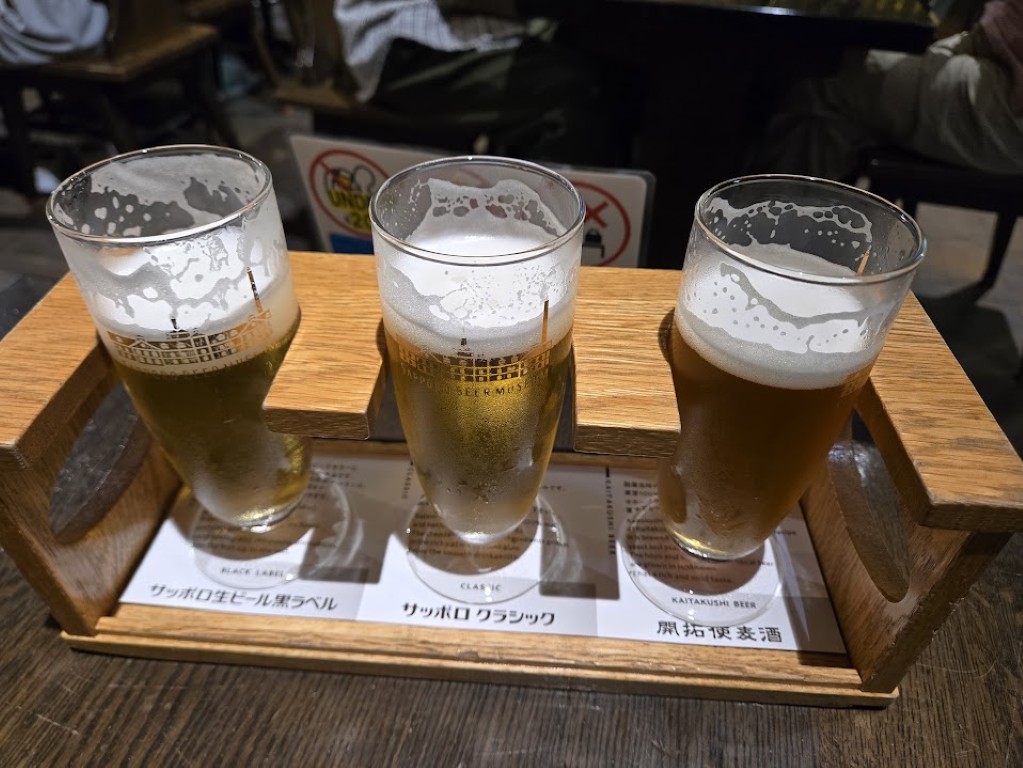
At the end of the tour, we did have a tasting of three different kinds of Sapporo beer, all of which were… fine. Let’s be honest – Sapporo isn’t the most exciting beer on the planet, but it’s fine.

After splitting three reasonably large beers on an empty stomach, we were definitely ready for lunch. The beer factory campus has a number of restaurants specializing in different things, but we were after a local favorite – Genghis Khan!

What, you ask, does a Mongol emperor from the 13th century have to do with food in Hokkaido?  Well Genghis Khan is a dish cooked on a round iron plate that sort of looks like a Mongol helmet.  That’s basically it.  The Mongol empire tried to invade an entirely different part of Japan at one point, and was rained out twice. However, the dish was invented in Hokkaido in the 1930s.

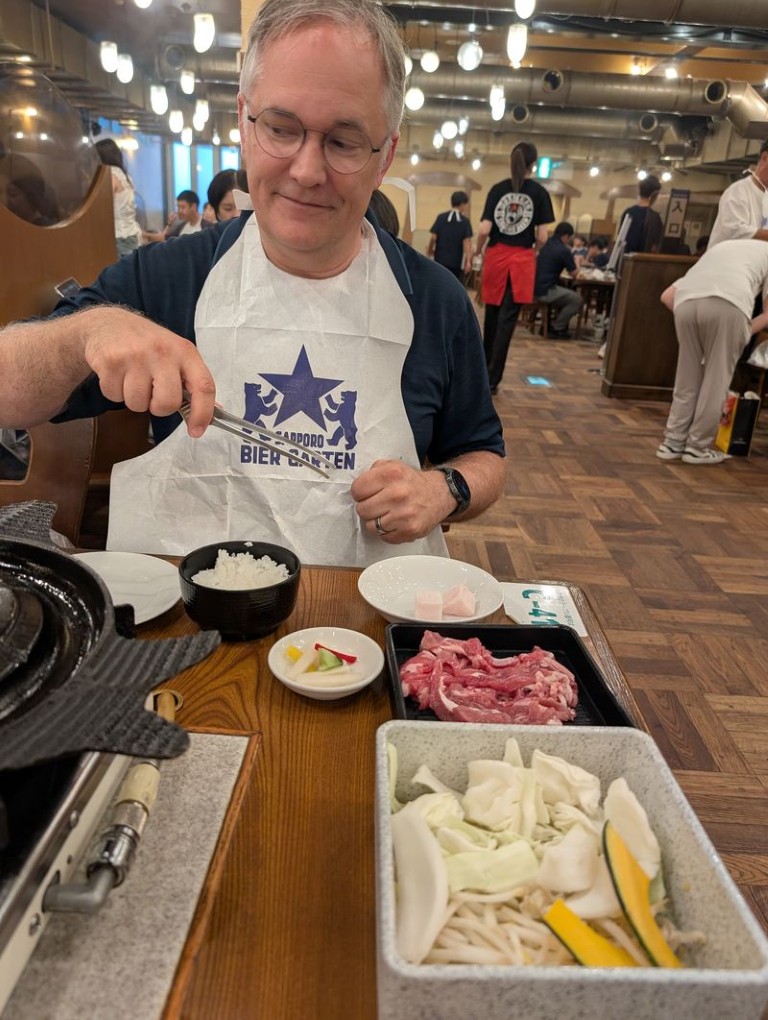
So how does it work?  Well, first you put your jacket in a bag to prevent it smelling like grilled lamb, and don a bib.  Next, the server lights up the grill on your table and a robot brings you some meat and veggies. (The robot is, as I understand it, optional.)

We, um, forgot to take a picture of the grill itself, which is the thing that DEFINES the dish.  Oops.  Anyway, you grease the grill up with lamb fat, layer the veggies around the bottom of the grill, and then grill mutton or beef up on the top of the dome.  Everything smells amazing (note the SERIOUS ventilation system up top), and the lamb juices run down and flavor the veggies.

It was absolutely delicious, marred only by the fact that a) they forgot to bring us the fat until we asked for it, and b) they also forgot to bring Leigh’s meat and rice, and we didn’t realize there was supposed to be more until after we had paid.  Oops.

At this point, it was raining pretty hard, so we decamped to a nearby shopping mall to wait out the weather and maybe look for a kids manga for me to practice my Japanese on.

After the rain abated a bit, we headed back into town to see what other trouble we could get into.  We found a great little tea shop, where the host demonstrated how to prepare Japanese tea – it was an interesting compare and contrast with the similar demonstration we’d had in Thailand eight months earlier.

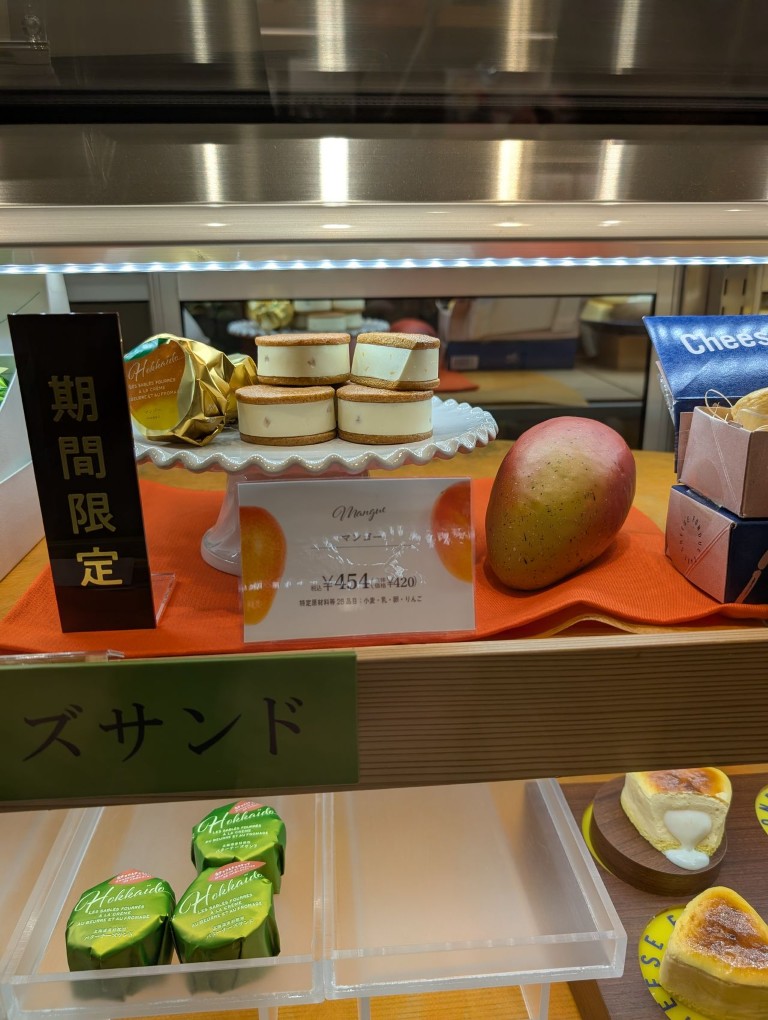
Even though we failed to document that, we DID get a picture of the mango pastry we had as a snack.


This was in the basement of a department store.  There’s always amazing food in the basements of Japanese department stores.

For the rest of the afternoon, we just wandered in and out of various stores, including an ENORMOUS pop culture store called Mandarake.  It would probably have made more sense if we a) knew anything about Japanese pop culture, or b) knew Japanese.  But it was still fun, in a maximalist sort of way.

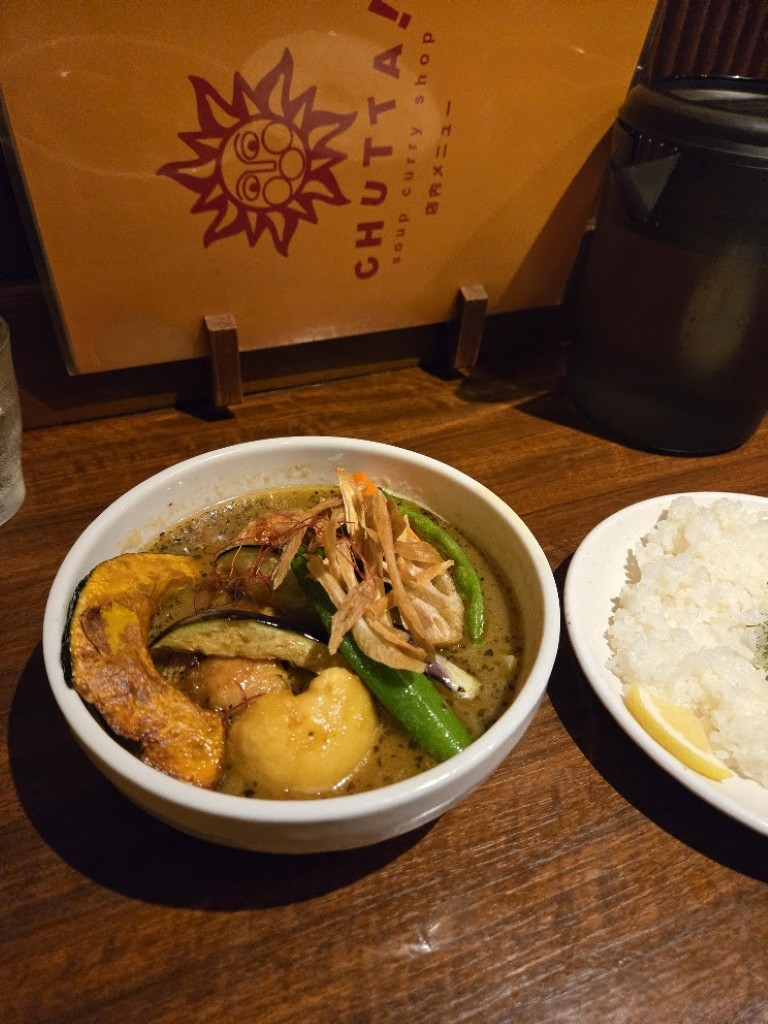
For dinner, we wanted to try one more Hokkaido specialty – soup curry!  I had several possibilities on my map, all of which turned out to be absolutely full to the gills, with wait times on the order of an hour.  Reddit to the rescue, and we found a delightful little hole in the wall to get our fix.

So what IS soup curry?  Regular Japanese curry tends to have a very thick sauce made with roux cubes.  Soup curry is much thinner, spicier, and tends to have a mountain of vegetables.  Comme ça: (Or should I say, このような:)

Doesn’t that look amazing?  It WAS amazing!

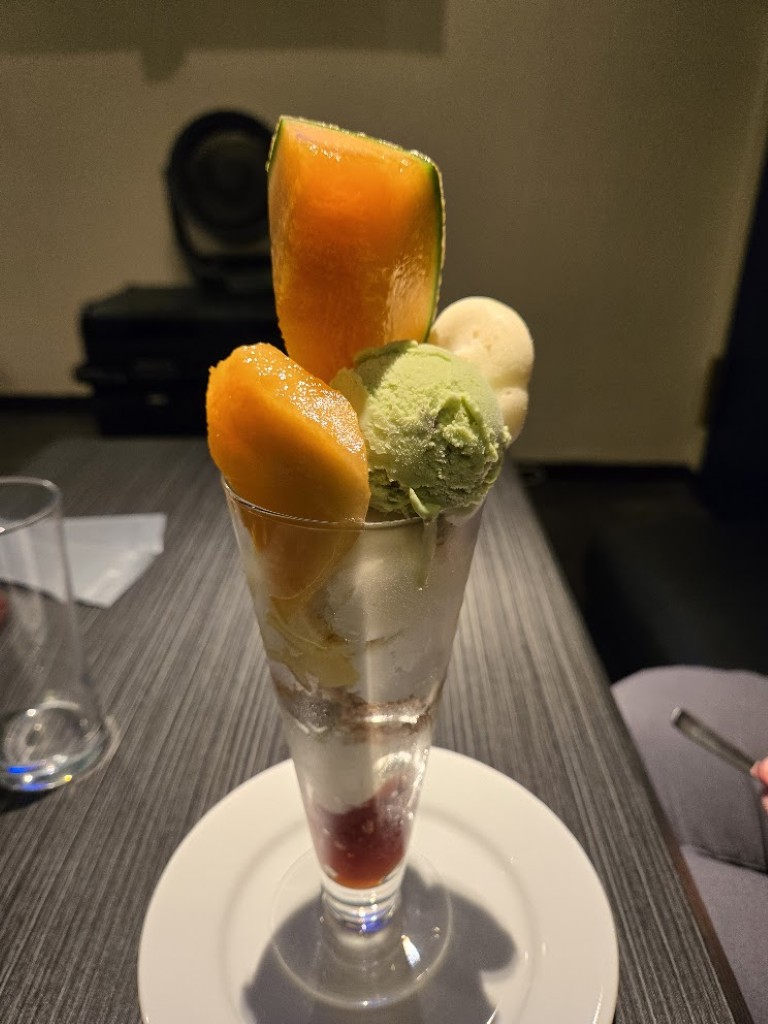
Now, I don’t want you to get the idea that all we think about on vacation is food, but let’s be honest – that really is most of it.  The last iconic Sapporo dish we wanted to try before we left was Shime-parfait, which has become extremely popular in the last ten years or so.  What is?

It’s parfait.  Just fancy.  I had spent quite a bit of time trying to pick the perfect one out of the amazing spots we had seen online to try, and didn’t allow for the fact that approximately a million other people had ALSO done that, so the first two places we went to had lines over an hour.

Which is how we ended up as the only two customers in a fifth-floor bar the size of a Subaru Outback that nonetheless advertised parfait.  Was it TikTok bait?  Probably not.  Was it delicious?  Hell yes. Hokkaido is famous for melon, for good reason.


And then bed.

Japan 2026, Day 1: Sapporo

One of the big reasons we love to travel is to eat delicious local food, and we decided to hit the ground running in Sapporo with a visit to the Nijo Market.  It’s one of those hybrid “tourist destination but place where you can also just buy a big pile of food” places that you see frequently, including our very own Granville Island back in Vancouver.

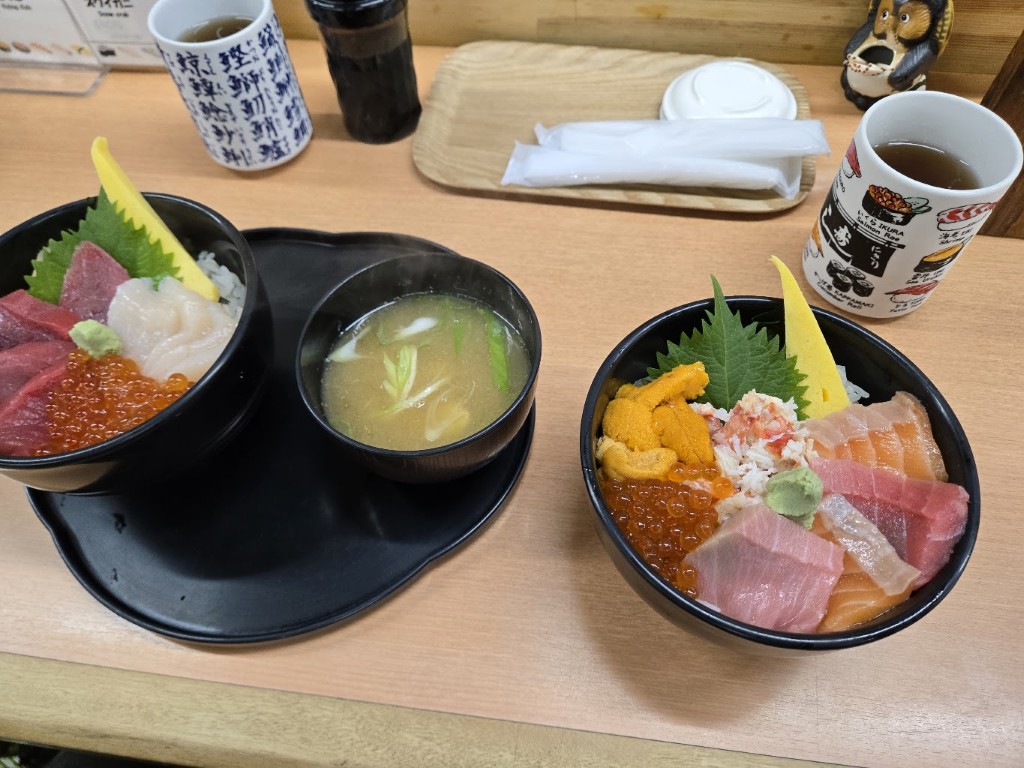
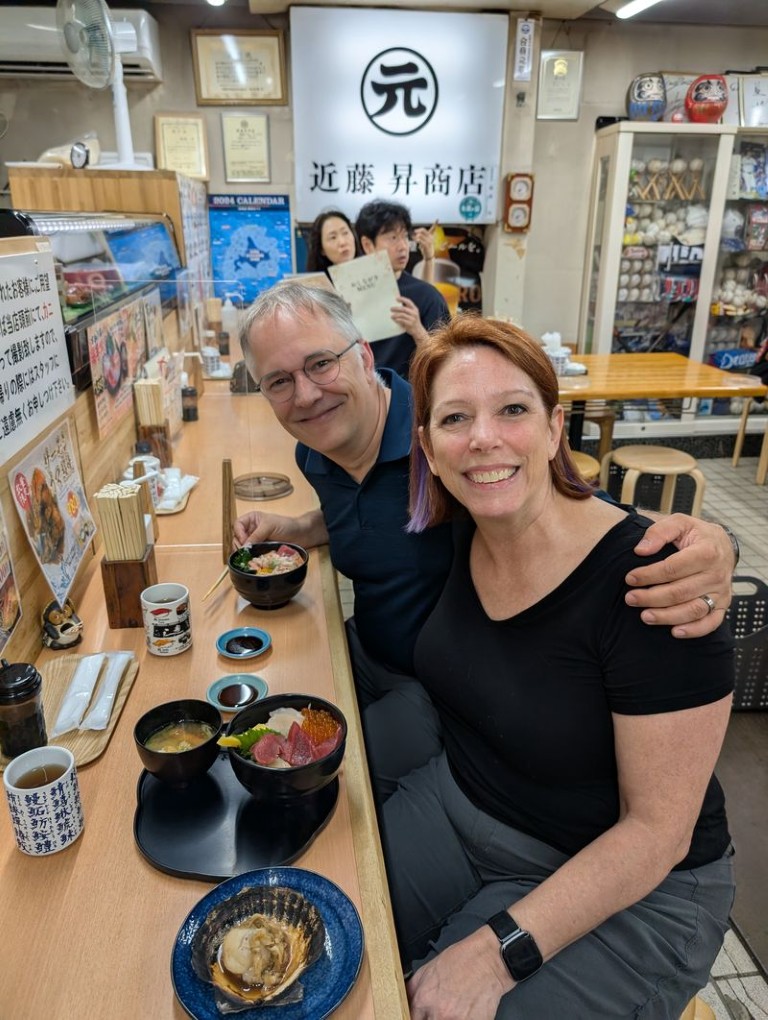
We arrived fairly early, and even so, some of the places were already starting to draw a line. But we managed to find a spot at a counter and order our first donburi of the trip.  I opted for a variety bowl.  Leigh, however, knew what she wanted: “Bring me a big pile of tuna, salmon roe, and especially scallops, and I will be delighted.”  So they did. And she was.

You could tell it was a place accustomed to tourists – the manager came out and insisted on taking our picture. Also appearing – the grilled scallop included with Leigh’s combo.

After breakfast, we had some time to fill before we could go eat some more, so we went to look at Sapporo’s most famous landmark, the beer factory.

No, just kidding – the beer factory was Wednesday.

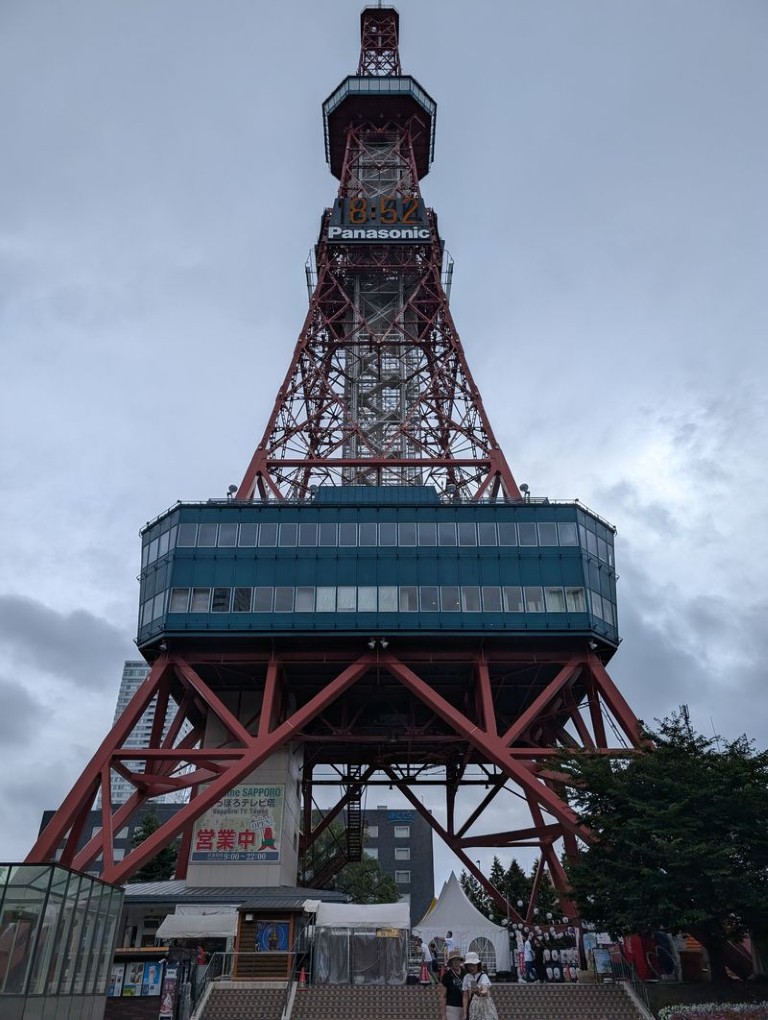
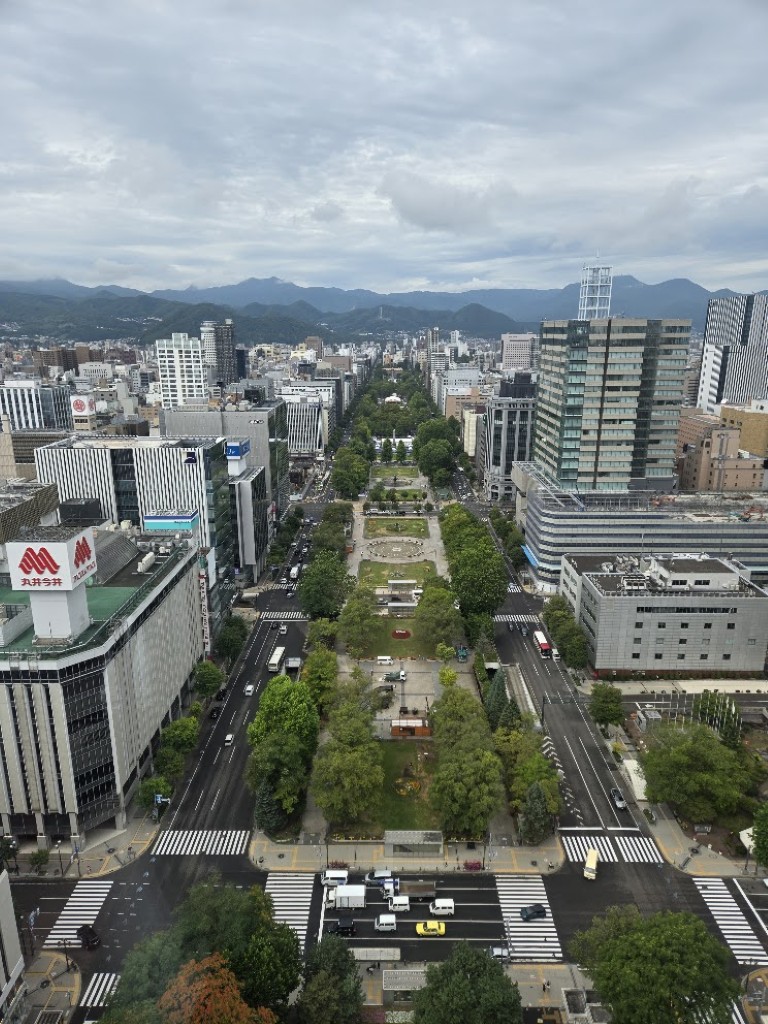
Instead, we went to the Sapporo TV tower.  Here it is from below:

And here’s the view from the top:

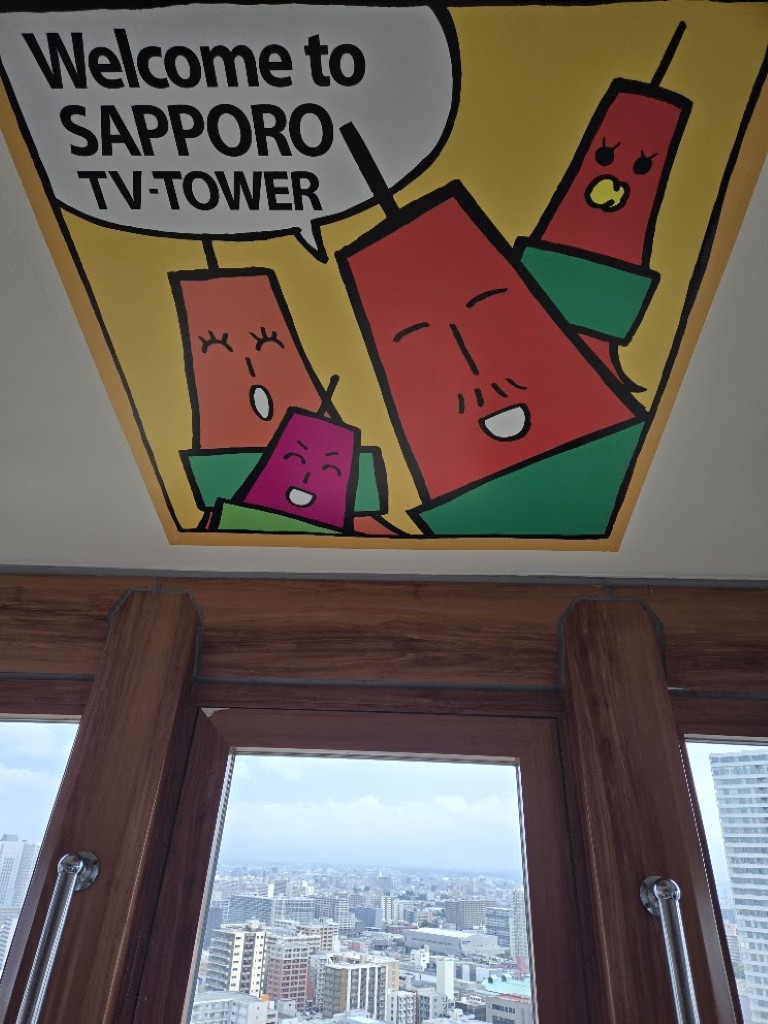
And here’s the tower mascot.  It’s Japan – EVERYTHING has a mascot.  This one’s name is Terebi-Tōsan.  Which literally means “Television Daddy.”  I am not making this up.

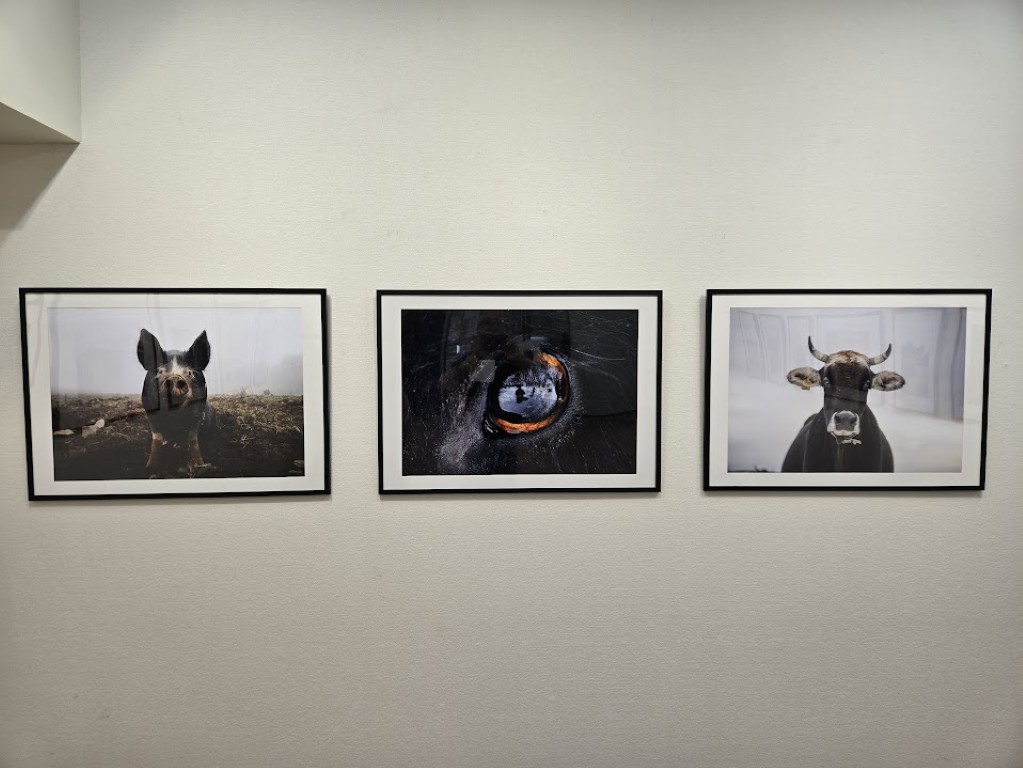
We didn’t have any formal plans after that other than just sort of wander around and soak up the city and try to recover from the jet lag. We got some fancy caffeine, looked at a clock tower and a fountain, and visited two small galleries, one for crafts, and one for photography.

Here’s some photographs of farm animals. (You can always click to make any of these pictures bigger.)

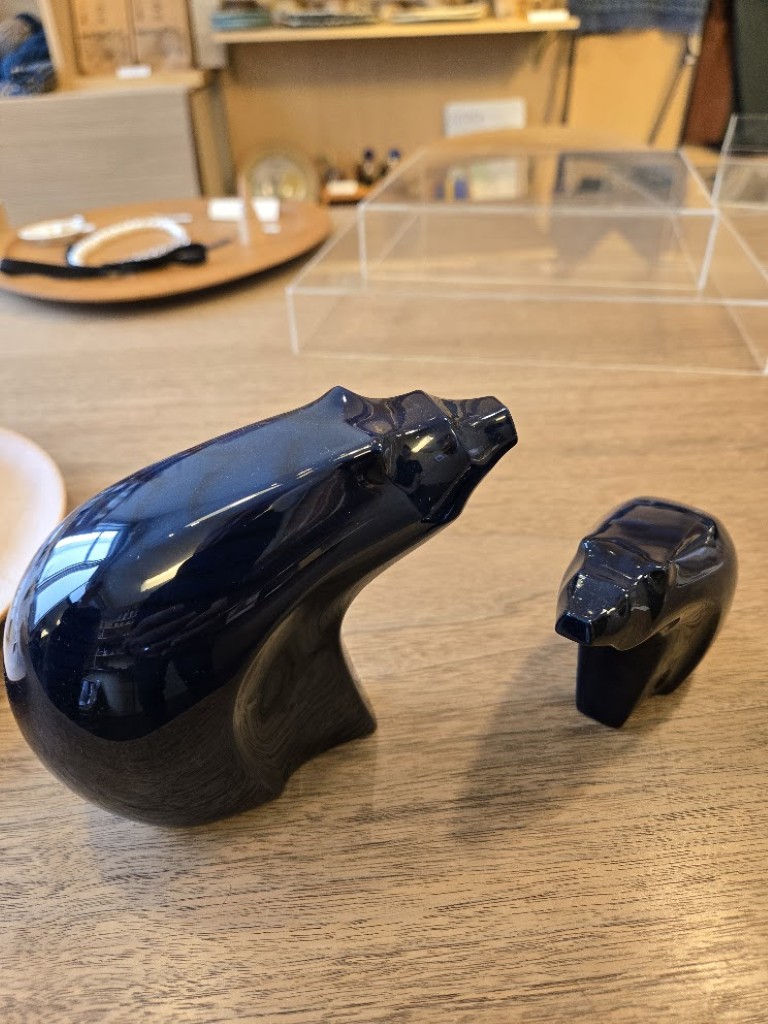
And here’s a carved bear and cub.

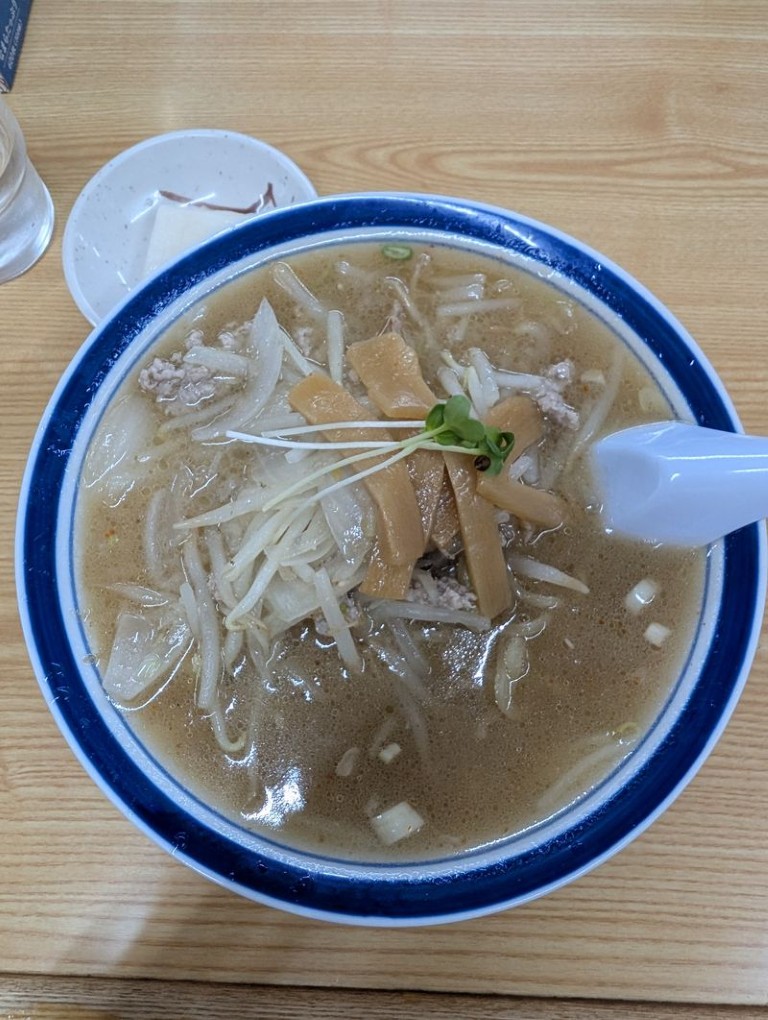
And by this point, we were ready for lunch! One of the foods that Hokkaido is known for is miso ramen.  The (probably apocryphal) story of the origin of miso ramen is that a drunk customer demanded that their ramen be dumped into a bowl of miso soup, rather than the traditional broth.

Whether or not the story is true, the generally agreed birthplace of the style is a small lunch counter located inside a stationery store.  Seriously – I held our place in the (long!) line while Leigh went and looked at fancy pens.  Once we got in, it was definitely a “eat your soup and get out” sort of place, but the soup sure was good.

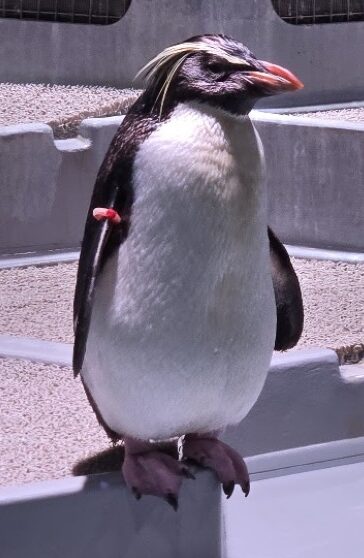
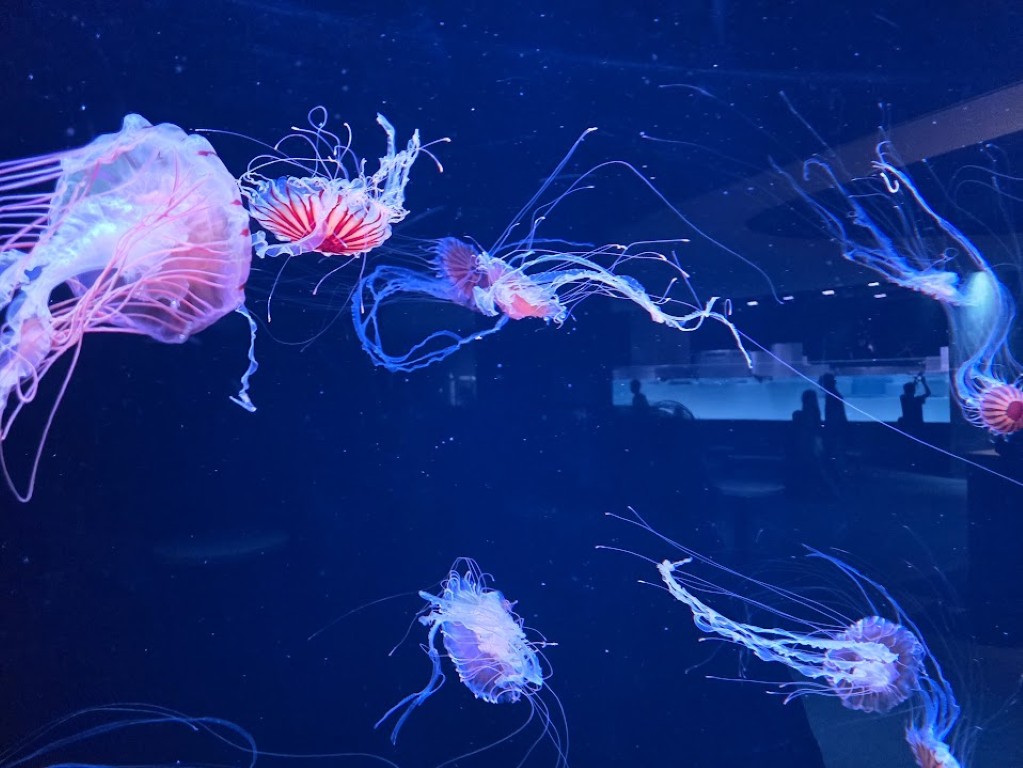
After lunch, we decided to go visit a nearby aquarium.  This was not an enormous museum like the one in Osaka – just a small, carefully curated collection of marine life.  Including these cuddly little guys:

Also these cuddly little guys:

(Note: cuddliness not guaranteed.)

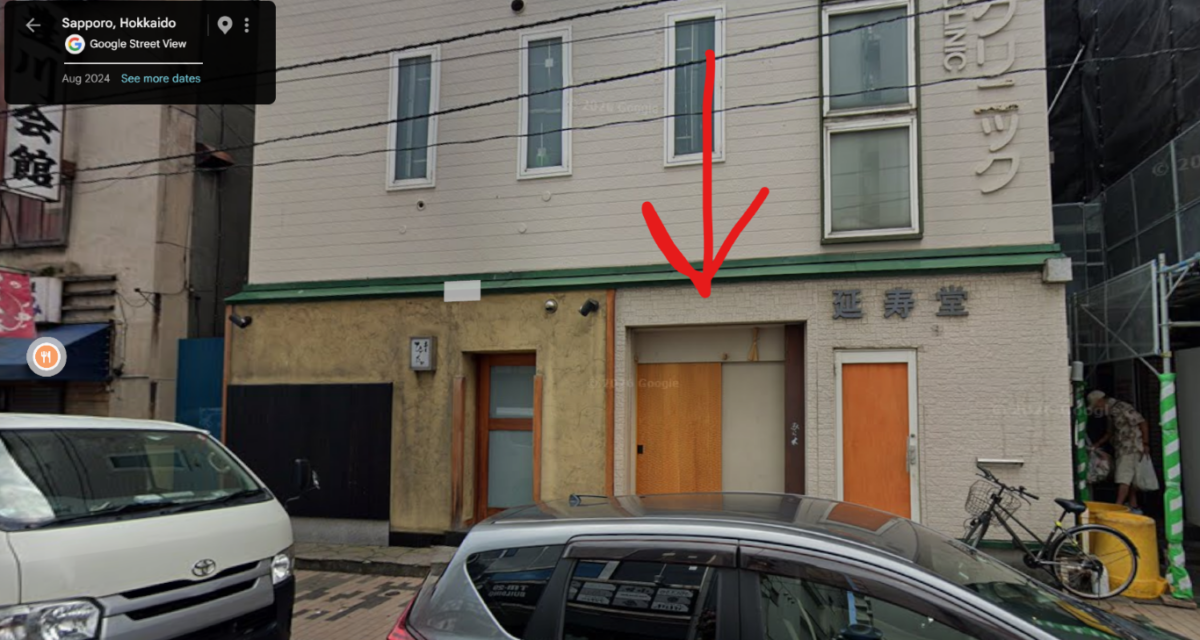
We have mentioned in some of our previous travels that we have a good friend who is a SERIOUS gourmand.  When he tells us where to go, we go there. (See our meals with him in Kyoto here and here.) We asked him where to eat in Sapporo, and he recommended Tempura Araki, an 8-seat omakase tempura restaurant. (I had to go online a month out and stab the reset button repeatedly at just the right moment to make sure we got reservations.)

It was so fancy we could barely identify the door from the outside, that’s how fancy it was.

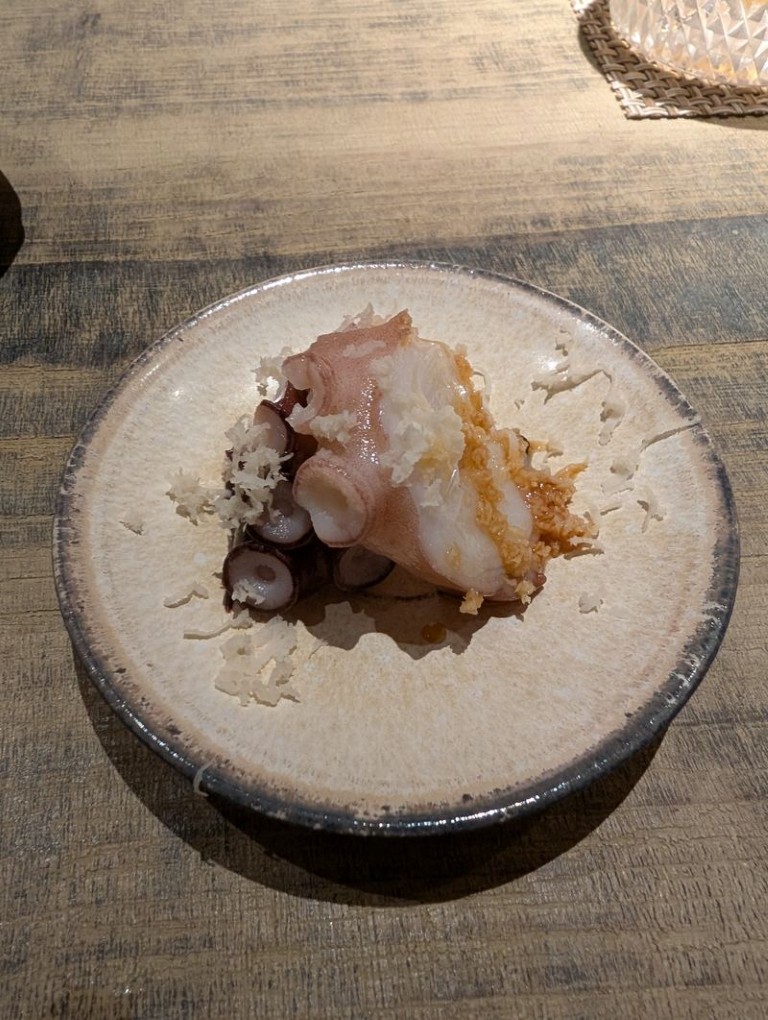
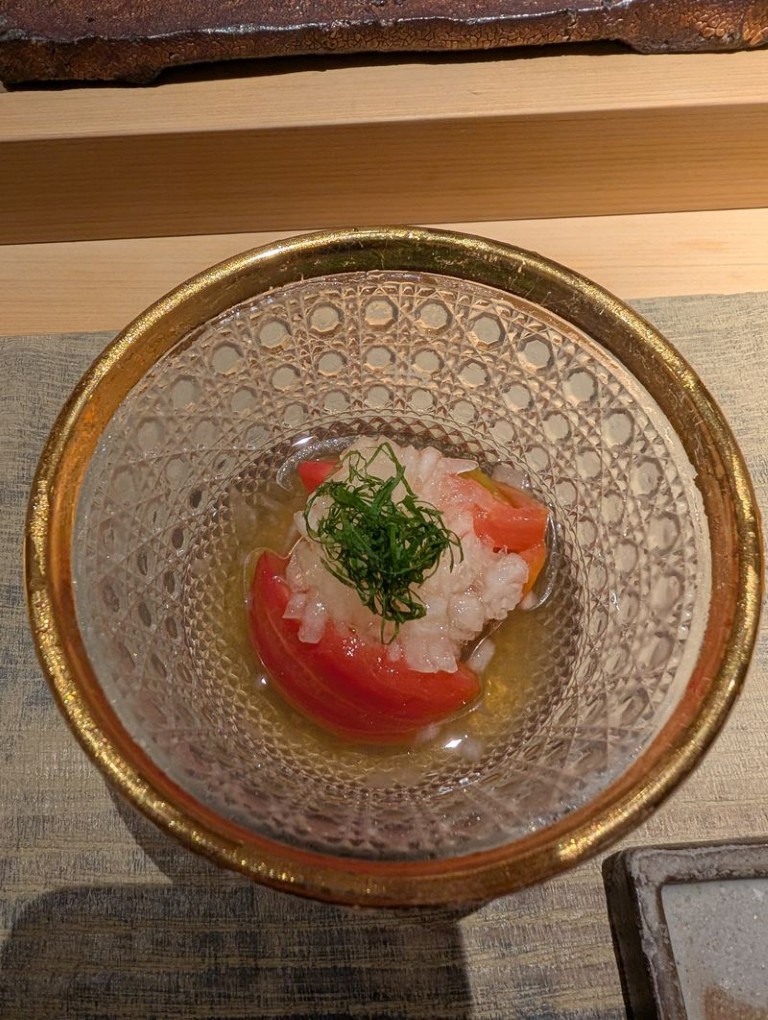
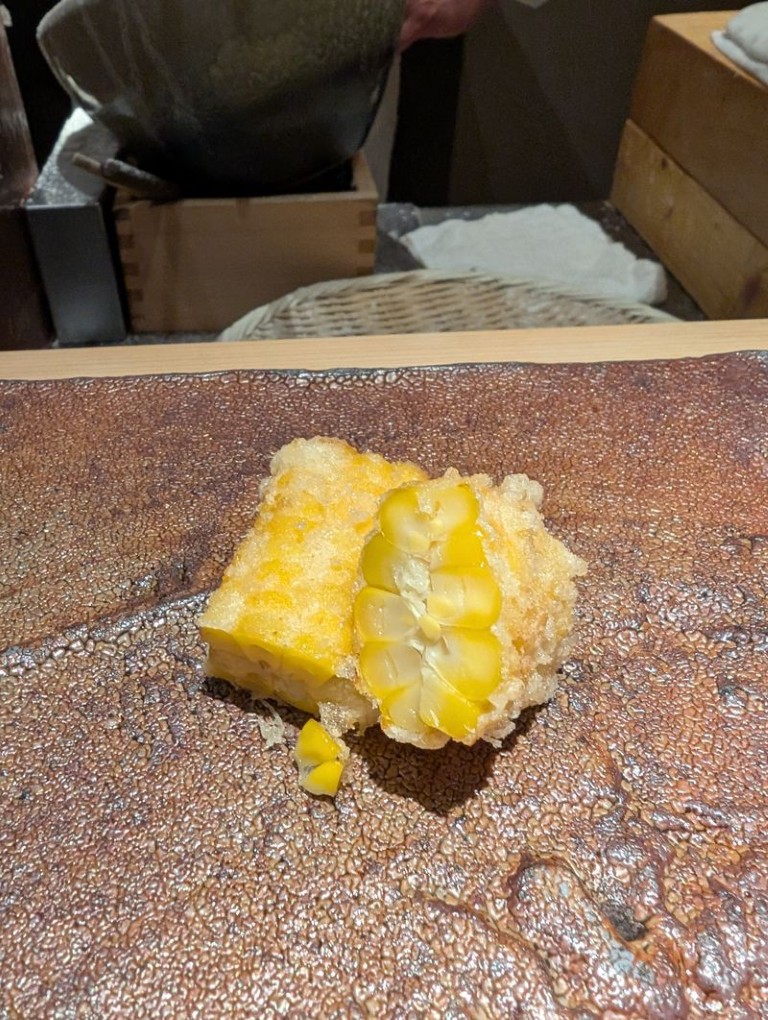
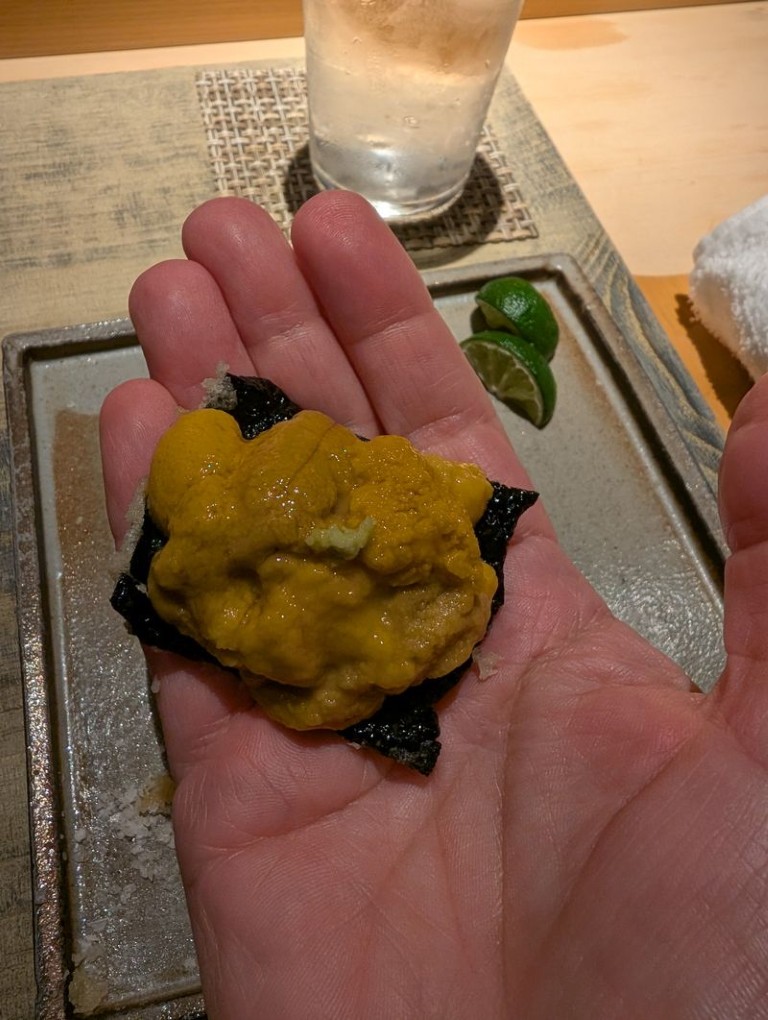
Over the course of a lengthy meal, we were served an incredible quantity of dishes, not all of which we photographed.  But here are a few highlights:

Fried octopus:

The best tomato you have ever eaten:

Fried local corn:

A fried seaweed sheet, lightly garnished with a small hint of sea urchin:

This was a hell of a meal.  Stuffed and reeling from jet lag, we staggered back to our hotel through the crowds and called it a night.

Japan 2026, Day 0: Planning and travel

After going to Japan in August once before, we learned two things:

  • Japan is awesome.
  • Japan in August is ungodly hot, and therefore less awesome.

So if we were ever to go back, it would definitely NOT be in…

…what’s that?  Work is sending me to Japan for a conference? In August?  Welp. After all, that’s how we ended up there last time, albeit for Leigh’s work rather than mine.

This time I would be attending the 20th World Targetry and Target Chemistry Conference, in the early capital of Nara, of bowing deer fame.  And this time it would be Leigh’s turn to faff about while I sat in a conference.

As before, we determined to make a vacation of the trip, and scheduled a week ahead of time to see some sights.  However, this time we got smart, and to avoid as much as possible of the aforementioned ungodly heat, we scheduled the vacation part of our trip in Hokkaido, the northernmost island of Japan, where it was predicted to be as much as five degrees Celsius cooler!

I had also kept a continuous DuoLingo Japanese streak for the entire time since our last visit, so I was completely prepared to ask directions to the zoo and then not understand the answer. (動物園はどこですか?) Would we actually be GOING to any zoos this trip?  Stay tuned…

We flew into Haneda airport in Tokyo.  There actually IS a direct flight from Vancouver to Sapporo in Hokkaido, but it only runs during ski season.  We should actually try that some January, now that I think about it.

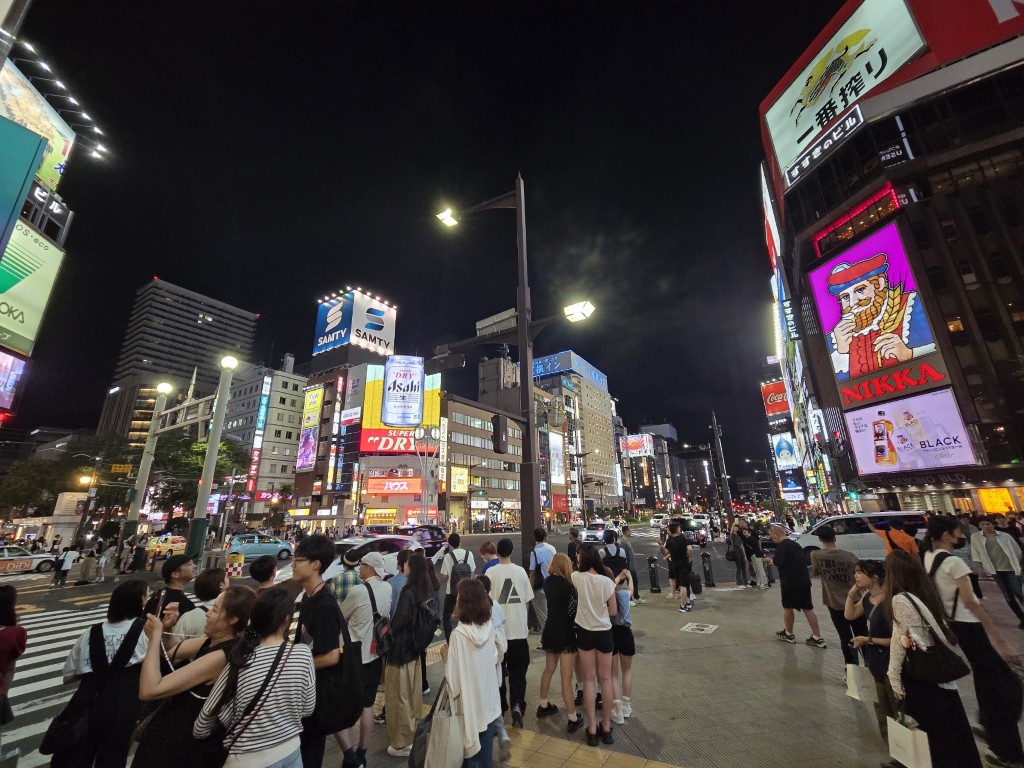
But for our decidedly NON-skiing trip (see also, ungodly heat), we flew into Tokyo and transferred to a flight to Sapporo.  Sapporo airport turns out to be nearly an hour from the city by transit, but we made it in and stumbled to our hotel, located on one of the most famous corners in Hokkaido.

Oh, Japan.  This was gonna be great.