International Meals – Mexico, Part 3: El Norte

The northern part of Mexico is where the “Mex” in “Tex-Mex” comes from.  It has saguaro cactus, flour tortillas, and John Marston in act II of Read Dead Redemption.  It does NOT have Clint Eastwood or Lee Van Cleef.  That’s Italy, and we already did that.

It also has a great deal of cattle, so for this episode we’re making the classic dish of carne asada, which literally just means “grilled beef”.  There’s a million recipes for this, so we turned to the inimitable Kenji Lopez-Alt, who did a whole pile of science to come up with his.

This means that the ingredient list was not 100% traditional.
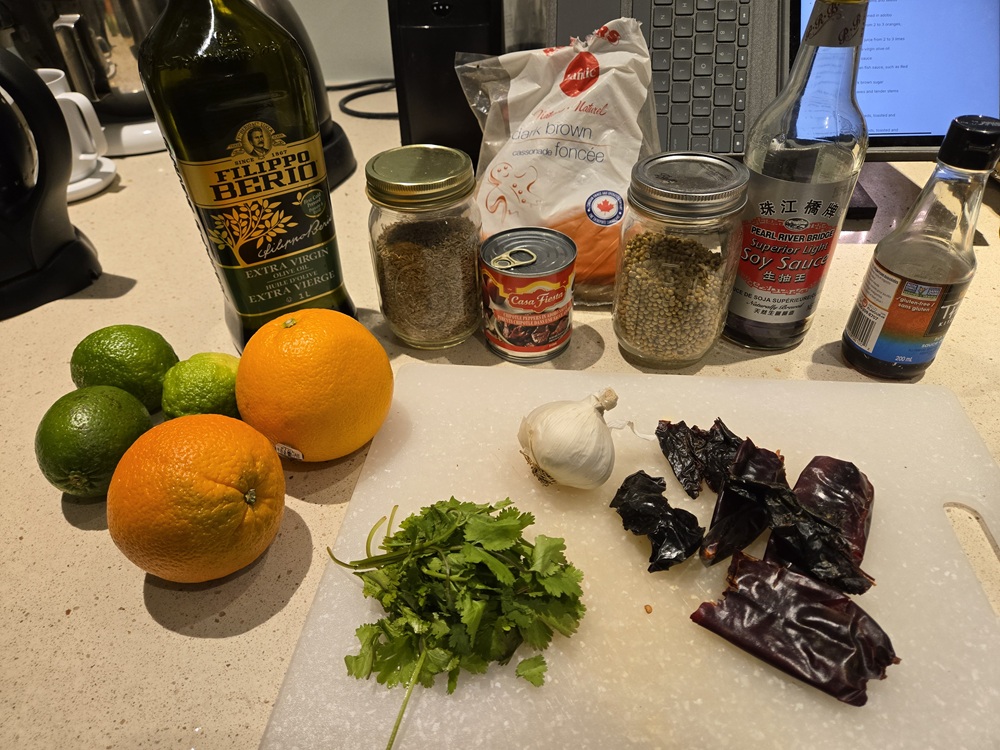
Dried chiles – check. Citrus juices – check. Olive oil – Sure, why not? Soy sauce? Fish Sauce?

We’ve never said we’re making the traditional VERSIONS of recipes on here – just that we’re making food vaguely from the region.  And the soy sauce and fish sauce here just serve to bring out more umami in the meat.  We’ll allow it.

The actual process is quite simple. You basically shove EVERYTHING in a blender, done, now you have a salsa.
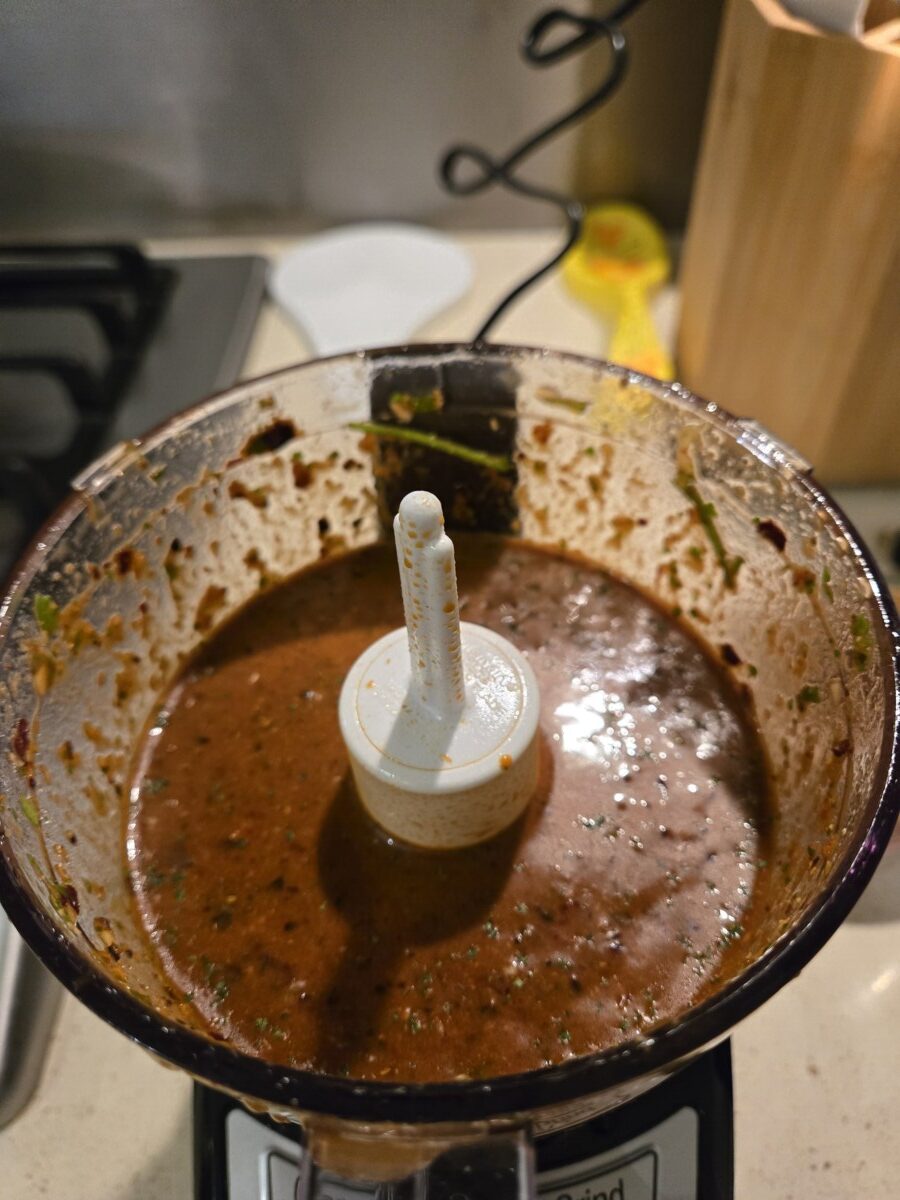
Separate out half of that to use as a topping later, and then take the other half and dump in more salt than is comfortable.  That’s your marinade.  But what are we marinating?  By going over to our nearby Whole Foods instead of the neighborhood grocer, I managed to locate skirt steak, which is a classic cut for this dish.
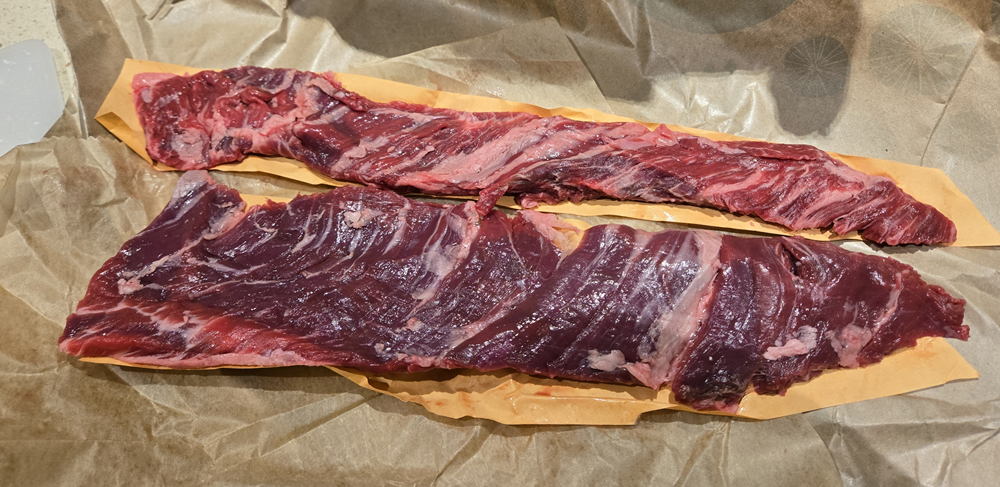
And with the steak marinating, it was time to go get some more hot chocolate, which you can check out over on my Instagram.  Or you could, if I were to post a link.

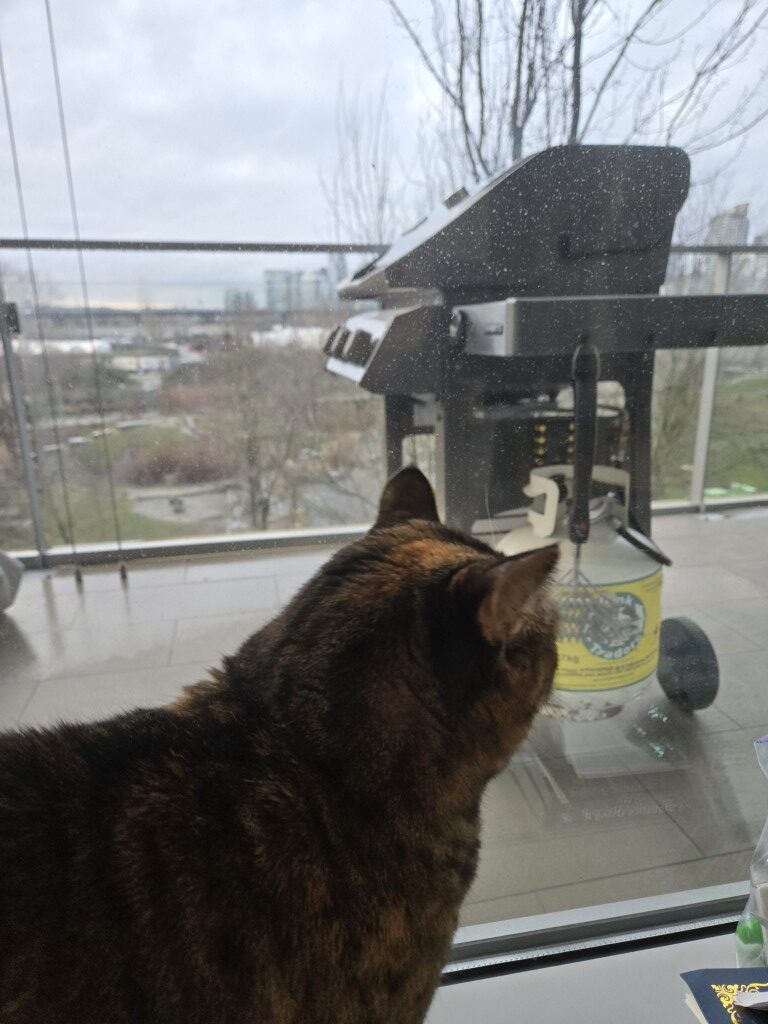
Once it was time to cook, we fired up the grill, and I got to once again marvel at the view from our balcony.
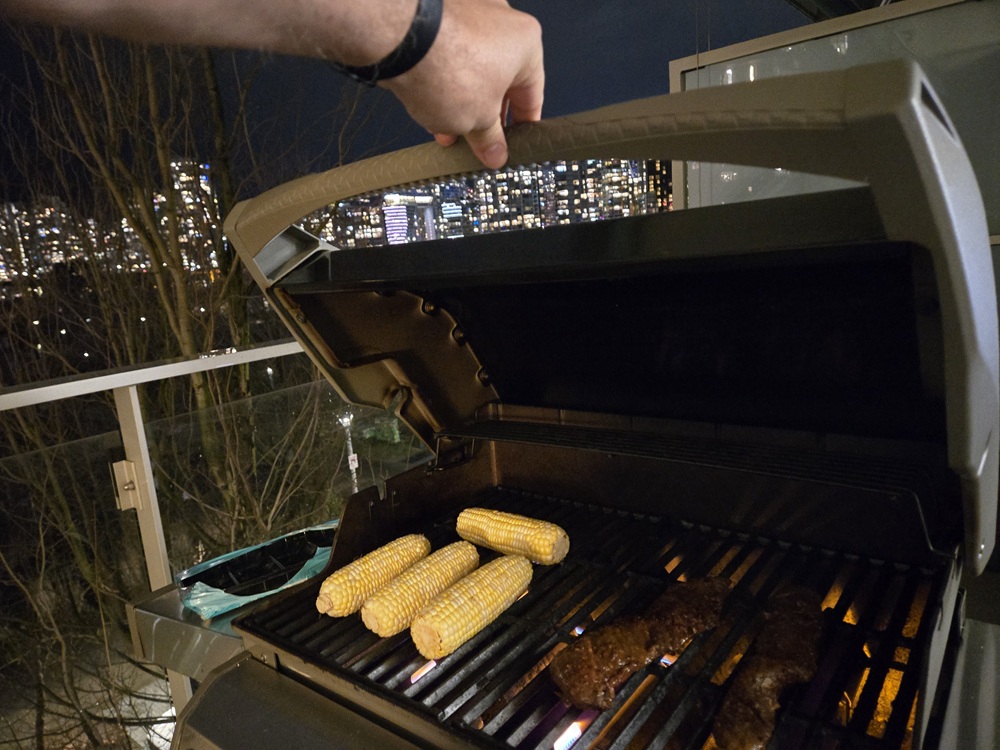
“But wait!”, you ask. “What’s the deal with the corn?”

I’m glad you asked me that, fictional narrative device person who is once again adequately serving their role in the construction of this essay.

For our second dish, we’re making elotes, better known as “Mexican street corn.”  It’s actually pretty simple – you grill corn until charred, and then you dip it in a savory sauce consisting of mayonnaise, salty cheese of some kind, and what ever other herbs and or seasonings you choose. It is absolutely addictive if you’ve not tried it.

And once everything was cooked, dinner was served!
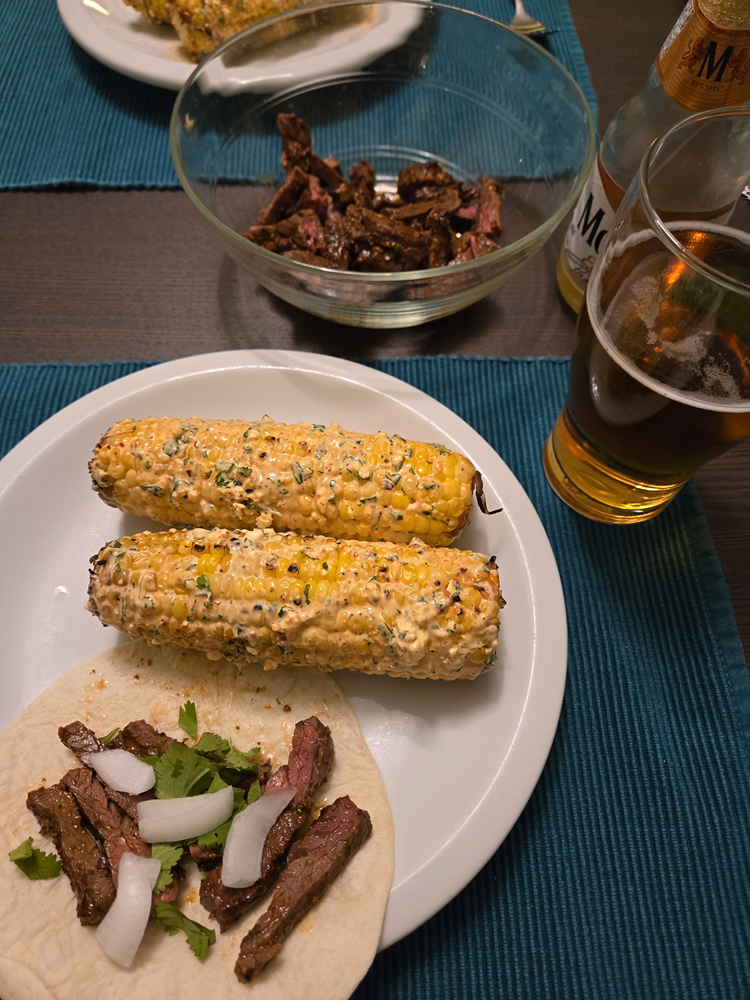
OK look – at this point, it shouldn’t come as a surprise to ANYONE that Mexican food is delicious, right? Mexican food is delicious. We all know that.

So lets take a second and think about the immigrants FROM Mexico, and everywhere else in the world who are being actively terrorized all across the US at the moment. Leigh and I are fortunate enough to have made our way to Canada and achieved citizenship, but that’s a direct result of our privilege, and we try very hard not to forget that.

Every time you sit down for a quiet, undisturbed meal, try to allow a thought for those who CAN’T do so without worrying that there will be a pounding at the door from the current US administration’s jackbooted Gestapo.

Do what you can to help, but the absolute, absolute minimum you can do is not turn away.

Even on a stupid blog about two idiots making dinner.

Next time, the Federated States of Micronesia.

Recipes:
Carne Asada
Elotes
International Meals – Mexico, Part 2: Jalisco

For our second Mexican meal, we’re making a representative dish of the state of Jalisco.  Jalisco is a state on the west coast of Mexico which is home to so many of the things that the world associates with Mexico that there is even a saying: “Jalisco IS Mexico.”  Mariachi, sombreros, and tequila all trace their origins to Jalisco.

And Leigh would know Tequila – she has a masters degree in the subject, issued directly from Tommy’s Bar in San Francisco.  There may also have been tequila involved in our acquisition of the “fnerk.com” domain name.

But let’s talk about food.  Specifically, we’re going to be making the rich stew known as birria, which has definitely had a moment recently as folks north of the border discovered that it’s really, really good in tacos.

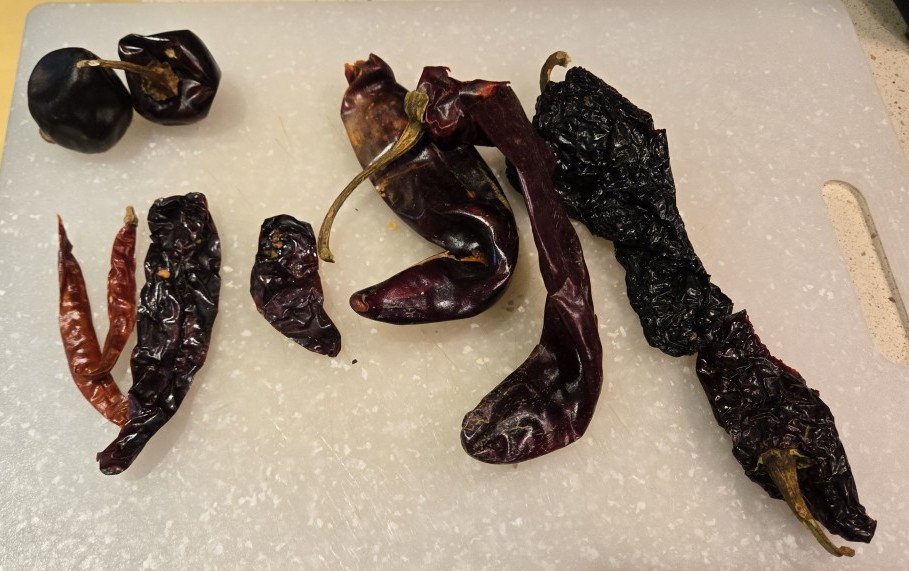
We’re going for the more old school version, which is a straight ahead stew served with rice. First off we have to make our adobo.  The recipe I found called for four different kinds of dried chilis, but since it didn’t include arbol chiles, which are the chili most closely associated with Jalisco, I added some of those too.  Why not?

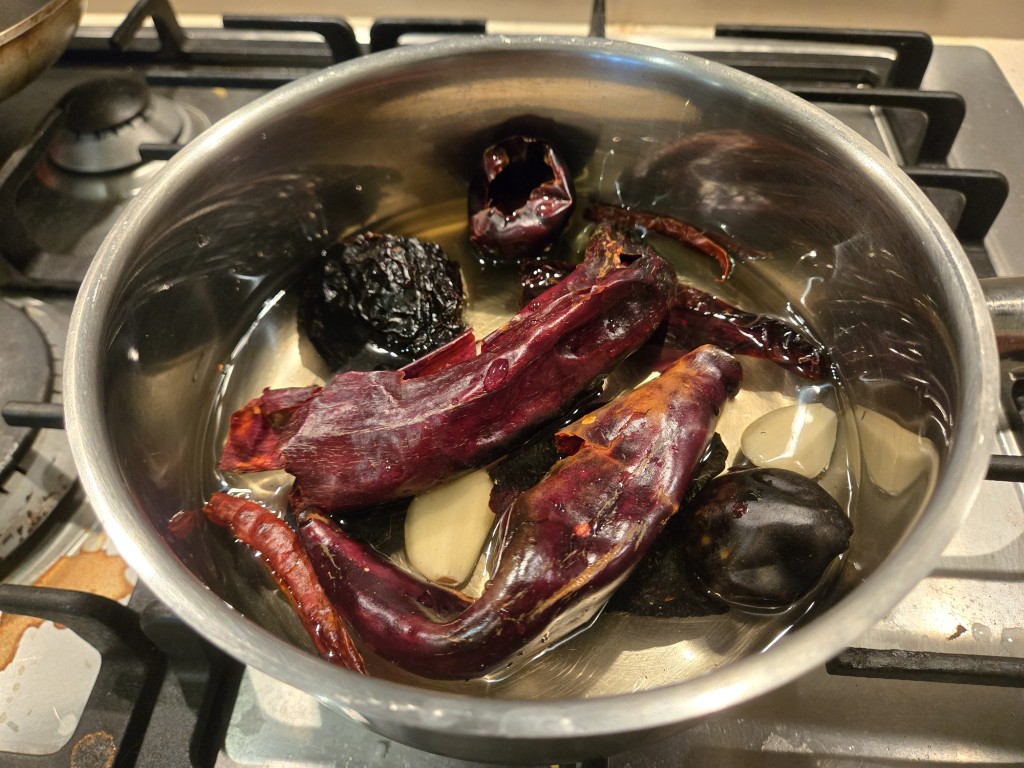
Upper left is cascabel, and then from left to right we have arbol, morita, guajilo, and ancho chiles.  The preparation of all these darlings is less complicated than for Oaxaca.  Each one gets toasted for about two minutes in a dry pan, and then they’re boiled together in a pot with some garlic for about ten minutes.

At this point, the apartment is ALREADY starting to smell pretty darn good.  Into the blender goes the whole pot, along with some seasonings like cumin and oregano.

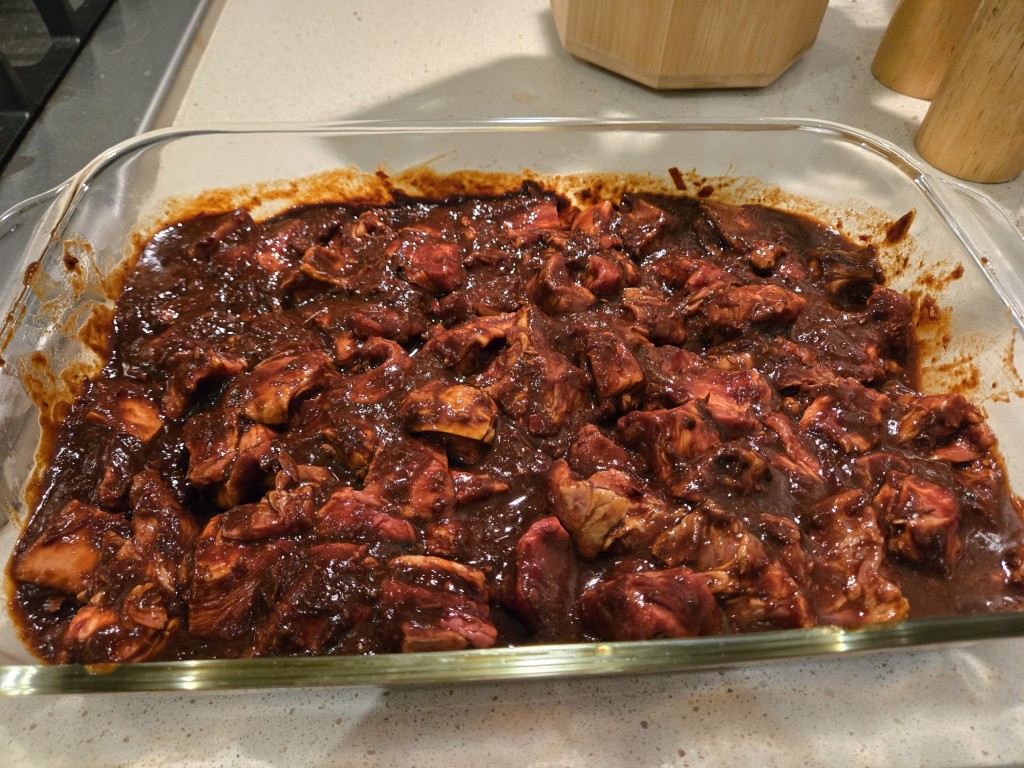
Birria is traditionally made with goat or lamb, but any meat that needs long cooking will work well.  (Dover sole birria is not a good idea.)  We went with lamb, so the next step was to just mix up the lamb and the adobo and shove the whole thing in the fridge for 24 hours to marinate.

After a day, this pan gets tightly covered with foil, and then goes in to roast for 3 hours.  And if we though our apartment smelled good when we were just toasting the chiles… man, by the time this was done cooking, I don’t think I ever wanted it to smell like anything else.

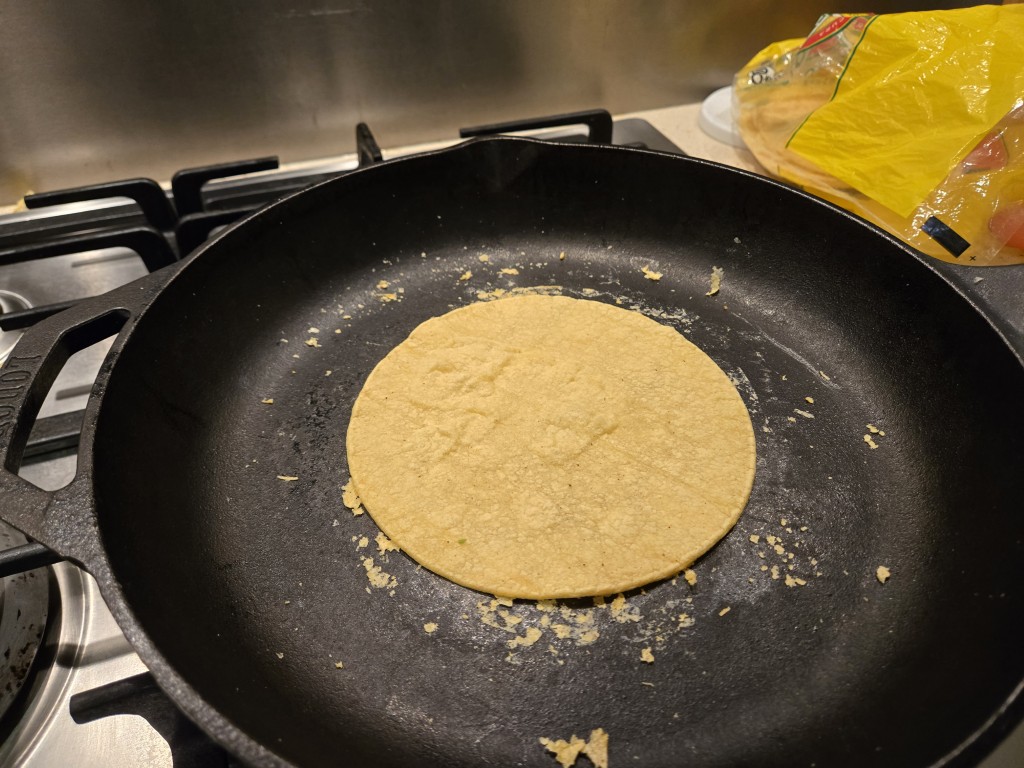
Let’s chop up some raw white onion, make rice, toast up some tortillas…

…and there’s just one more critical thing to do.

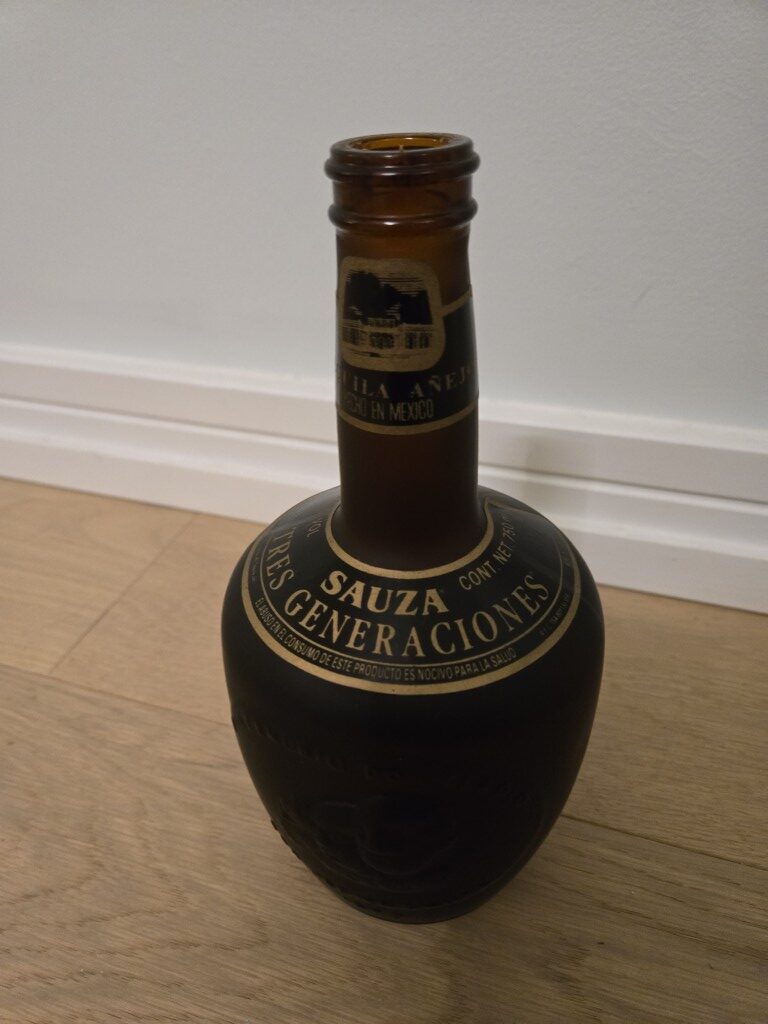
(yes,  it’s on the floor.  I needed a neutral background for the picture, and our table is the same color as the bottle.)

We’ve mentioned Heisenbooze on this blog before – alcohol that’s been around for so long that it’s clearly either amazing or disastrous, but you don’t know which until you open the bottle and collapse the wavefunction.  Research indicates that this particular tequila maker was good and then bad, and is now possibly good again, but this bottle was likely from right before good turned to bad the first time.

I dunno – it tasted pretty good to me.  Lots of vanilla and oak.

Leigh was driven home by a work colleague who had car trouble when she got here, so we had a third for dinner. That’s good for US, in that we love company, but bad for YOU, because when we have company, I always forget to take as many pictures as I should.

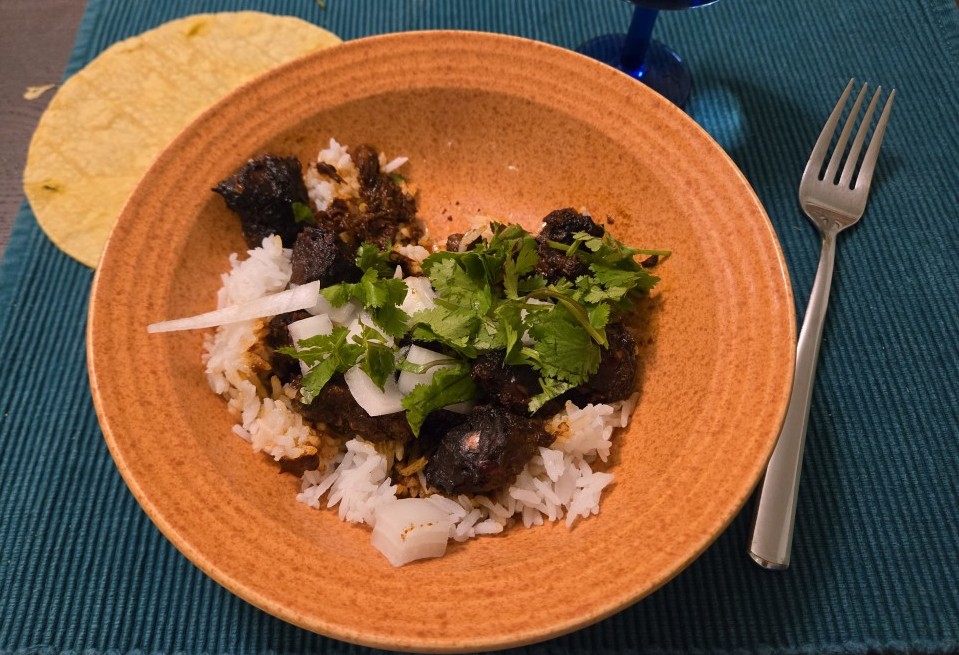
So here’s our “completed meal” photo, with perhaps less of the stew left than would have made for a better shot.

But I do. not. care. what the pictures looked like, because dear god – this was a meal to die for.  We have a big bag of chiles in the pantry now, and we WILL be making this again. Smoky, spicy, and delicious.

We also made a relatively modern dessert (from the ’90s or so) which also has its origins in Jalisco, Bionicos.

Bionicos is not complicated – it’s a mix of fruit chopped into relatively small pieces, and doused in a sauce made of condensed milk, sour cream, and sometimes yogurt.  This is then covered with crunchy bits like coconut, granola, and nuts. We decided to go with a mix of mango, pineapple, strawberry, and papaya.

What’s not to like here? ABSOLUTELY NOTHING, that’s what.

This meal was absolutely stonkers.

Next up, el norte.  After all, lots of planets have an el norte. (Yes, I know I just recently made that joke.  No one’s forcing you to read this, mom.)

Recipes:
Jalsico style Birria
Bionicos

International Meals – Mexico, Part 1: Oaxaca

By my count, this should be about our 110th country, give or take. I don’t have an exact count for a few reasons.  We didn’t start this blog until “Bosnia,” although at some point I will go back and transfer the old pictures off of Facebook. We also haven’t been consistent with our naming conventions – why “East Timor” but also “Côte d’Ivoire?”  Why “Korea, North?”

Just… shut up, OK?  That’s why.

Point being that we’ve done a LOT of meals at this point.  And a number of countries have had food cultures so diverse and extensive that we just couldn’t bring ourselves to do just one meal.  China got five.  India got four. Italy and Indonesia each got 3, and France got 2.  Again, no science to it, that’s just how we decided to do it.

But as we get into the second half of the alphabet, there’s not too many left that are screaming to be split up.  I’m pretty sure we aren’t going to get four meals out of St. Vincent and the Grenadines.  So with this meal we’re starting on what may be our last multi-meal country, Mexico.

And we’re using the same highly scientific process that we’ve used up to this point of “half-assing some research” to determine precisely which regions and meals will be represented.  We’re aware that what you get at “Mexican Restaurants” in the U.S. and Canada is largely “Tex-Mex” cuisine, which is a very specific (and delicious!) fusion of influences from Northern Mexico, but also Texas.

We’re going to try to stick with more specifically Mexican influences for these three meals, and the three regions we’re going to attempt to highlight are Oaxaca, Jalisco, and “vaguely north.”  Lots of planets have a North.

For Oaxaca, we’re going to make a single item. One sauce.

That’s right – we’re not even going to make the meat for this one.  Just buying a rotisserie chicken and pouring our sauce over it along with a side of rice and beans.  (Technically, we’re “making” the rice and beans, but that’s so little effort it doesn’t count.)

How can we justify this little effort?  Let me cut and paste the ingredient list for this single recipe, shall I?

  • 78 grams chilhuacle negro chiles
  • 38 grams pasilla chiles
  • 27 grams guajillo chiles
  • 1/2 ripe plantain
  • 2 Roma tomatoes
  • 2 medium tomatillos
  • 1/4 large white onion
  • 2 garlic cloves
  • 3 tablespoons lard
  • 2 tablespoons almonds
  • 1 tablespoon peanuts
  • 1 piece cinnamon
  • 2 whole cloves
  • 1 whole star anise
  • 1/2 teaspoon allspice berries
  • 1/2 teaspoon black peppercorns
  • 1 tablespoon pumpkin seeds
  • 1 tablespoon raisins
  • 1 tablespoon sesame seeds (plus more for serving)
  • 1/2 teaspoon cumin
  • 1/2 teaspoon thyme
  • 1/2 teaspoon oregano
  • 2 bay leaves
  • 2 corn tortillas
  • 5 cups chicken stock
  • 4 teaspoons kosher salt
  • 67 grams Mexican chocolate

That’s right – we’re making one of the most complicated sauces in all of global cuisine, black Mole.

Step 1 – roast the chiles.  Wait – it’s the dead of winter!  How can we grill…

…oh wait, we live in Vancouver.

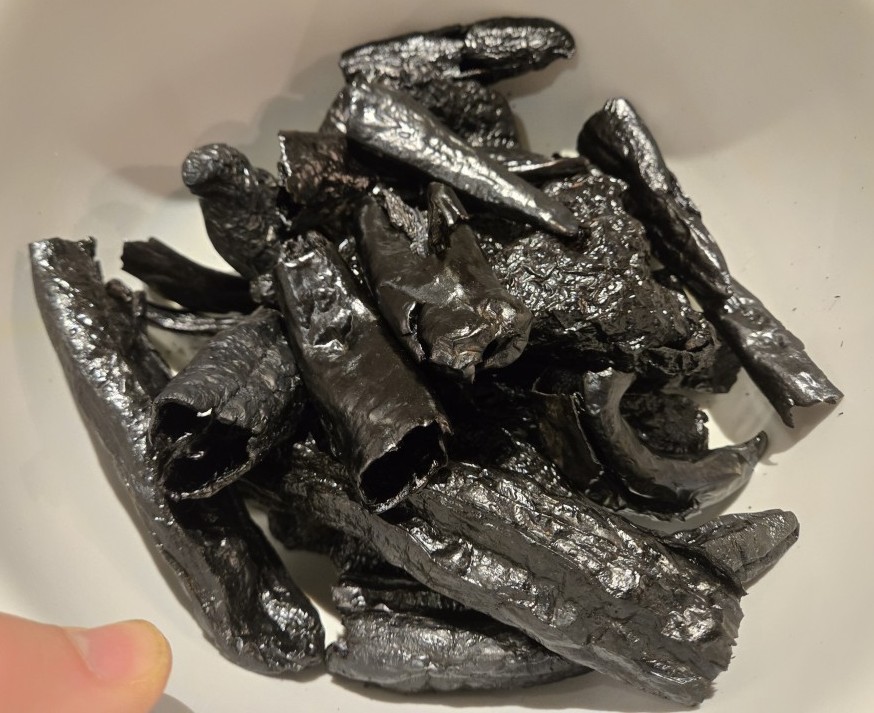
Honestly, this is still probably the  step we did the least well.  Martinez’s recipe (I had to look up how to properly punctuate that) stresses carbonizing the peppers on the grill and then washing and rehydrating them to remove the burnt flavor, but comments I’ve read since then disagree with this approach, and suggest it would have been better to pull them off a little sooner in the first place.

Before:

After:

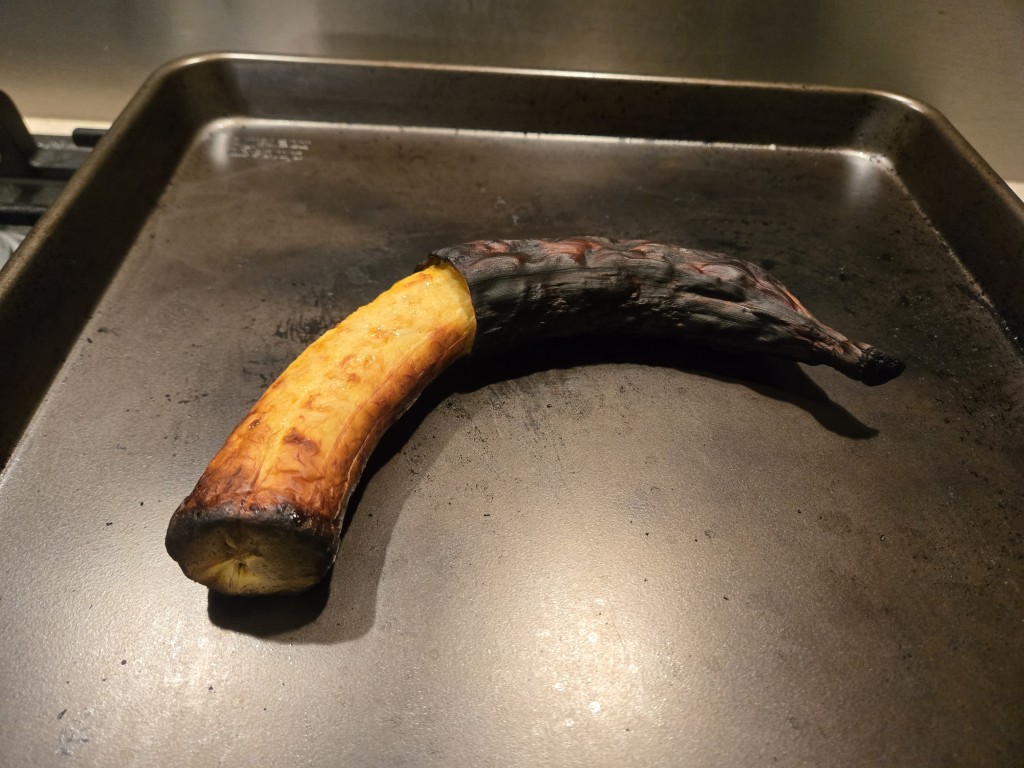
These were then washed and then left to soak in boiling water for an hour, which was intended to remove as many of the acrid notes as possible.  While the grill was still hot, we tossed on half a ripe plantain, which, hilariously, attempted to escape from its skin over the course of 20 minutes.


Note that the blackened skin on the left is empty – it contained the roasted plantain on the right when we started.

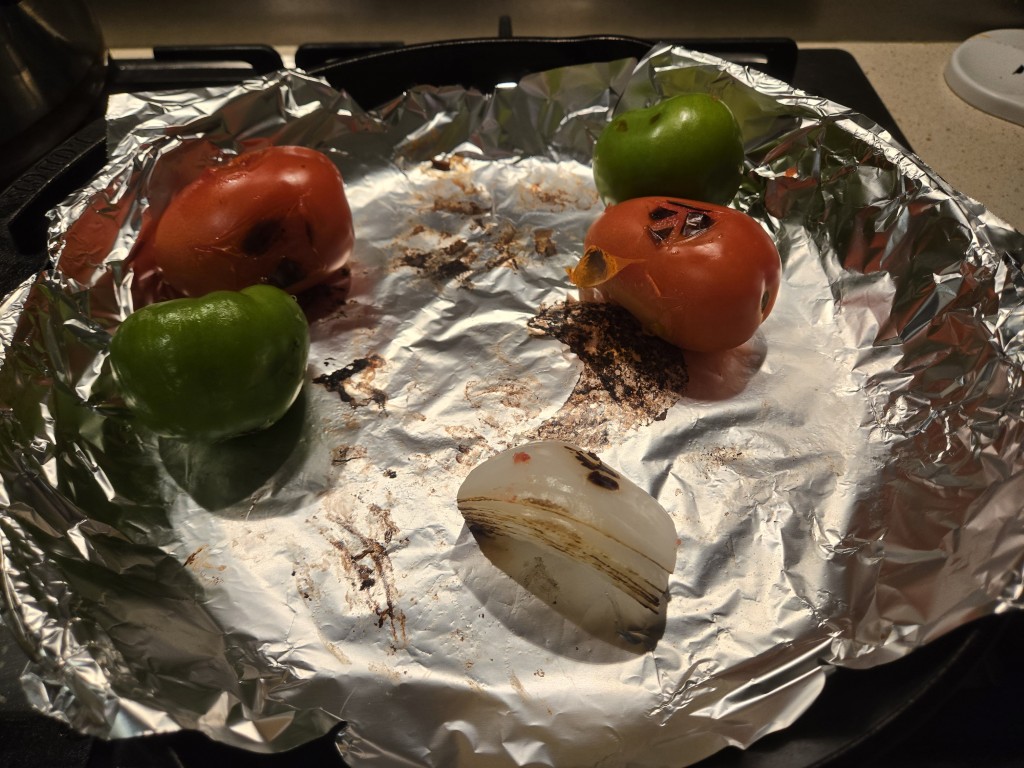
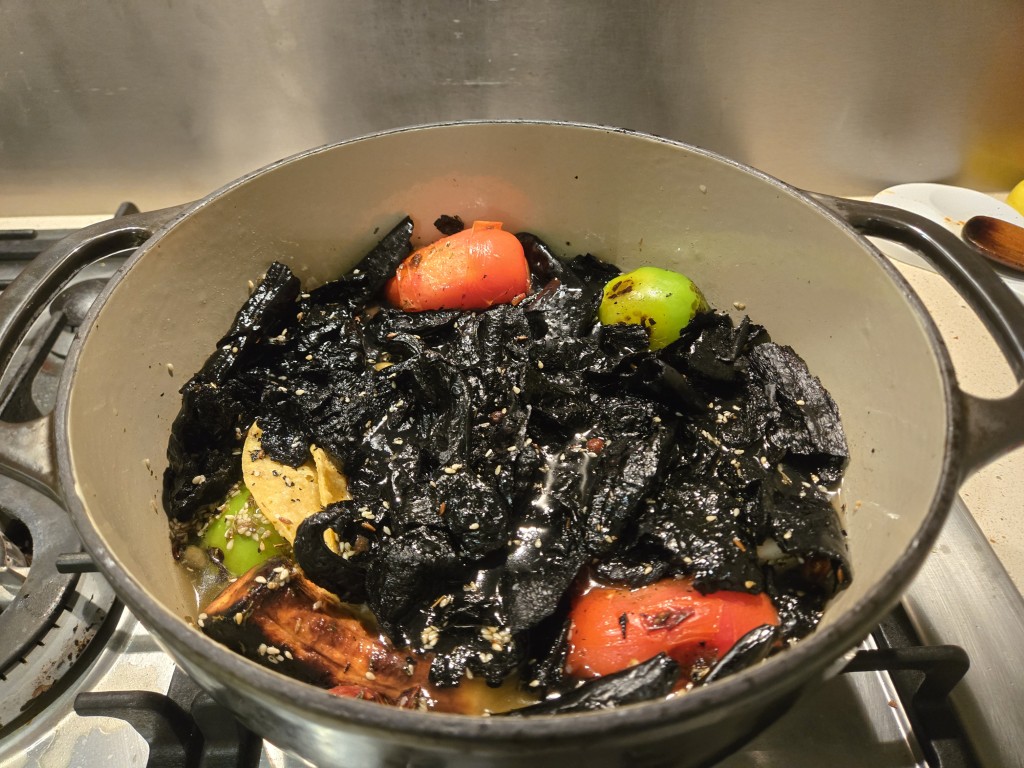
OK, what other prep do we need to do?  We need to blacken our veg.  I did this on a cast iron skillet, as instructed, but in future I might just haul out the blowtorch.


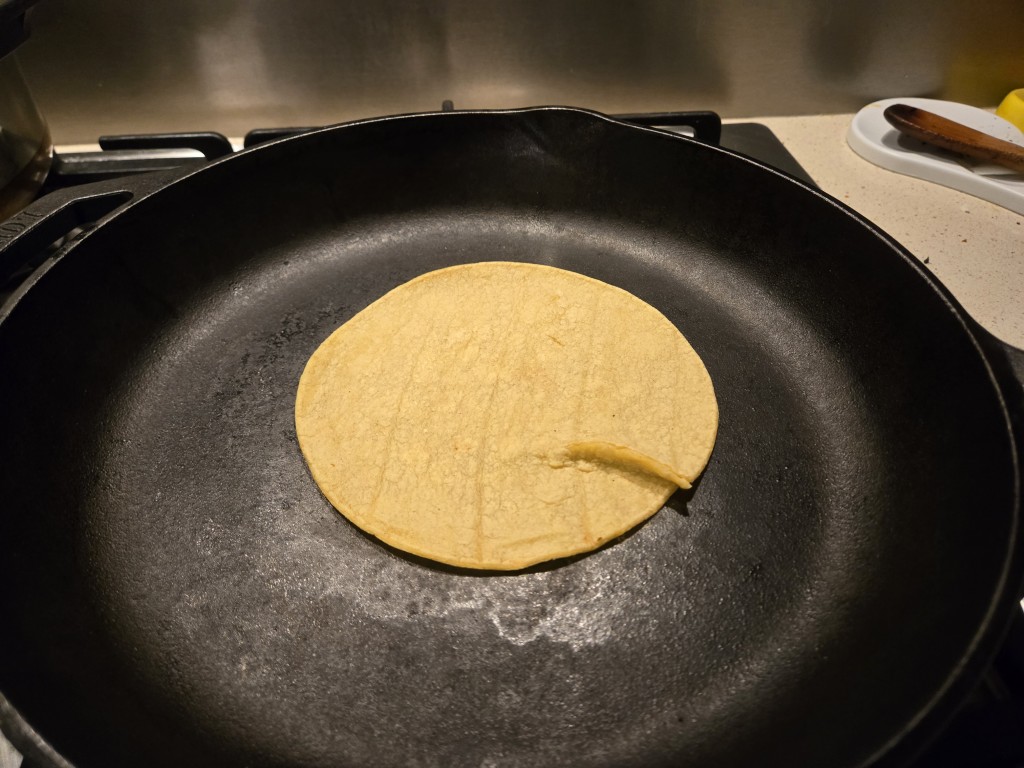
Need to toast a couple of corn tortillas, too.

The only other prep is to put all the ingredients in bowls so we can add them in the right sequence for the next steps.

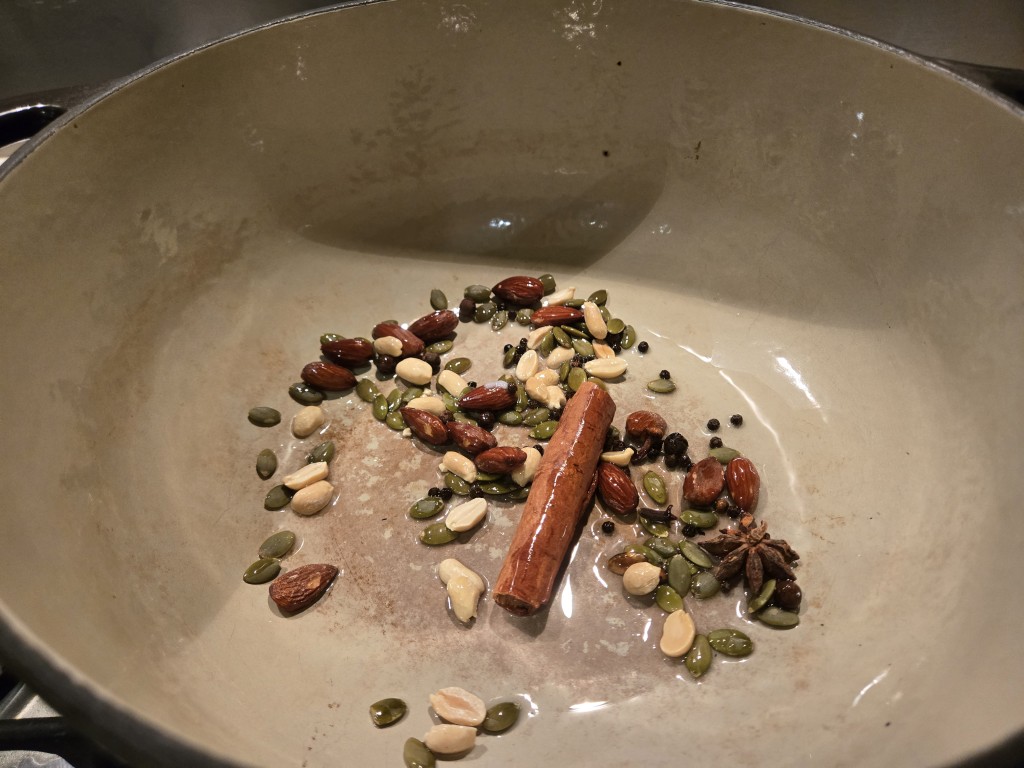
First up, melt the lard.  Then in with the almonds, peanuts, cinnamon, cloves, anise, allspice, peppercorns, and pumpkin seeds.

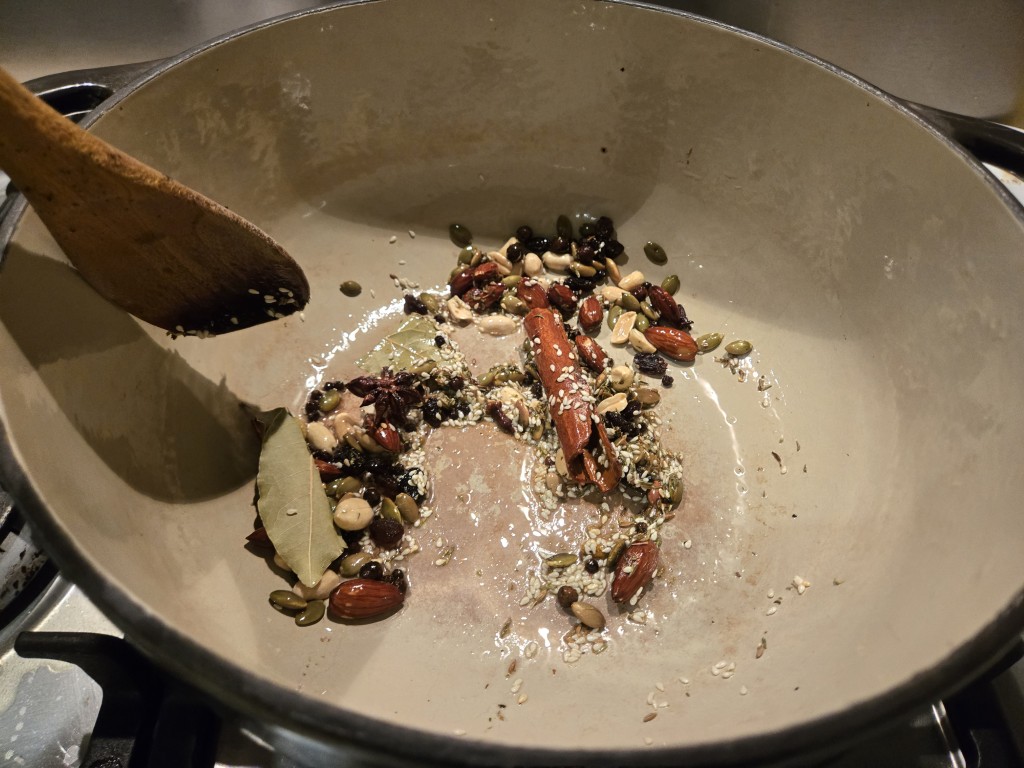
Next, raisins, sesame seeds, cumin, thyme, oregano, and bay leaves.

Once those have had a chance to toast a bit, in with almost everything else: chiles, plantain, veg, tortillas (yes, straight into the sauce), stock, and salt.

This gets simmered for an hour or so, then the whole mess goes into the food processor.

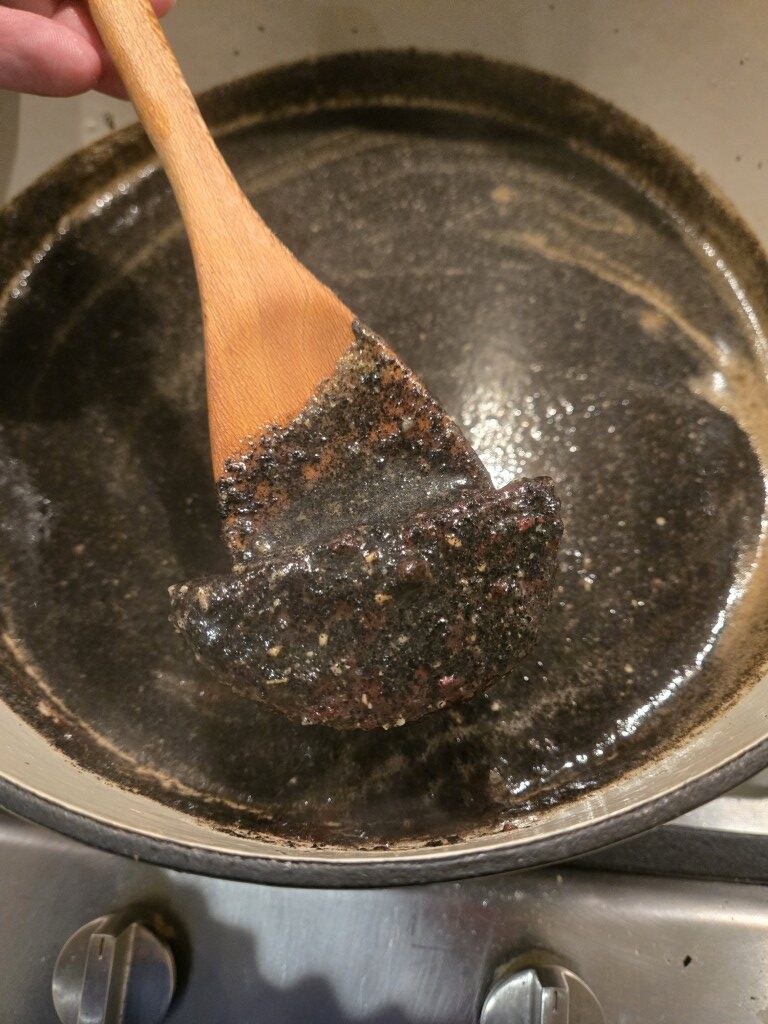
Once it’s all blended, you transfer it BACK to the pot with some more lard and then cook it for another ten minutes. When it’s finished, you turn off the heat and then stir in the chocolate.

And that’s it!  A bit gritty, since we weren’t using an honest to god blender, but the color is beautiful.

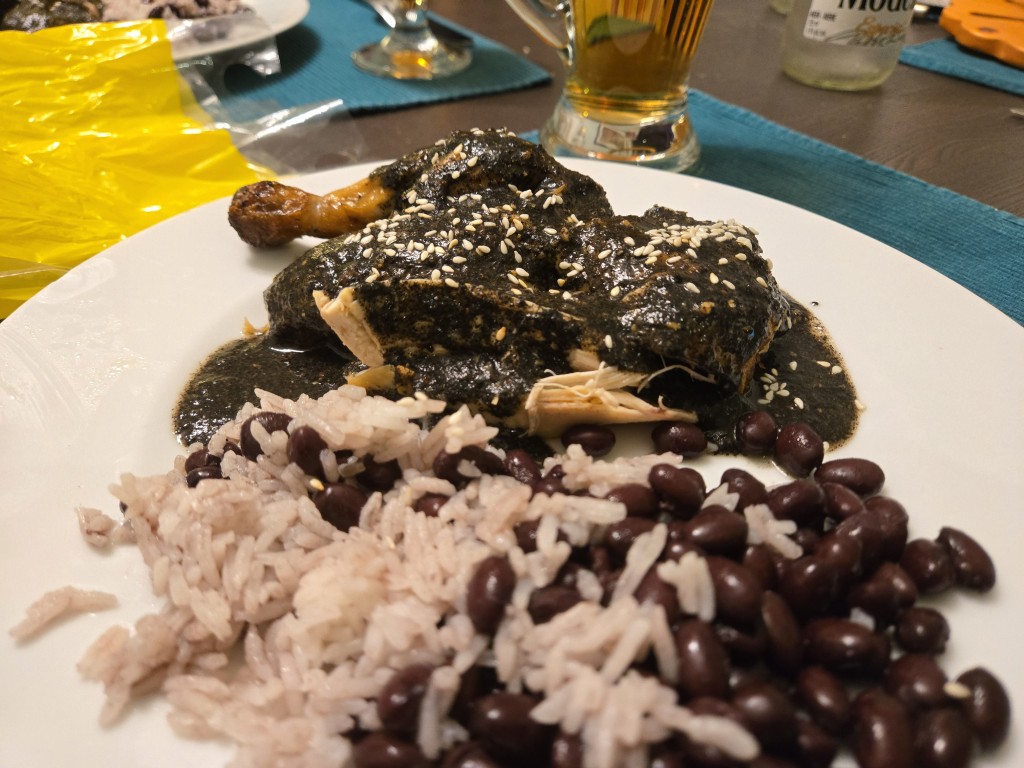
None of the recipes for this dish pay the slightest attention to the chicken.  “Serve over chicken” is how it’s usually described.  So given that, we just got a rotisserie chicken from the neighborhood grocery store.  A little rice and beans, a bag of corn tortillas, some Mexican beer, and here’s the final spread:

Pretty, innit?

In terms of flavor, it’s obvious what the GOAL was.  You could definitely taste the rich complexity of the sauce.  But… I think we did burn the chiles a bit too much.  I see the approach this recipe was going for, but I think I would have preferred having a bit less burned flavor to try to wash back out.  Still – this sauce is a BEAR, and I’m proud of us for even attempting it.

Next up, Jalisco! Home of tequila!

And probably also food, we’ll have to look into that.

Recipe:
https://cooking.nytimes.com/recipes/1023509-mole-negro